Posts Tagged ‘United for Literacy (formerly Frontier College)’

Anne Simpson was a happy discovery for me more than a dozen years ago when she was speaking and mentoring at Seawords, a workshop series on PEI (which marked the first time I set foot on the island). And while I’ve loved the magic of the poetic form ever since discovering, as a kid, the Welsh poet-and-occasional-itinerant-tramp, W.H. Davis, in a book my sister stole (borrowed too long?) from the school library, I’ve never tended to collect many collections. Simpson has been an exception from the get-go. Among other things, I’m grateful for the visual artist’s eye she writes with and her deep appreciation of the natural world.

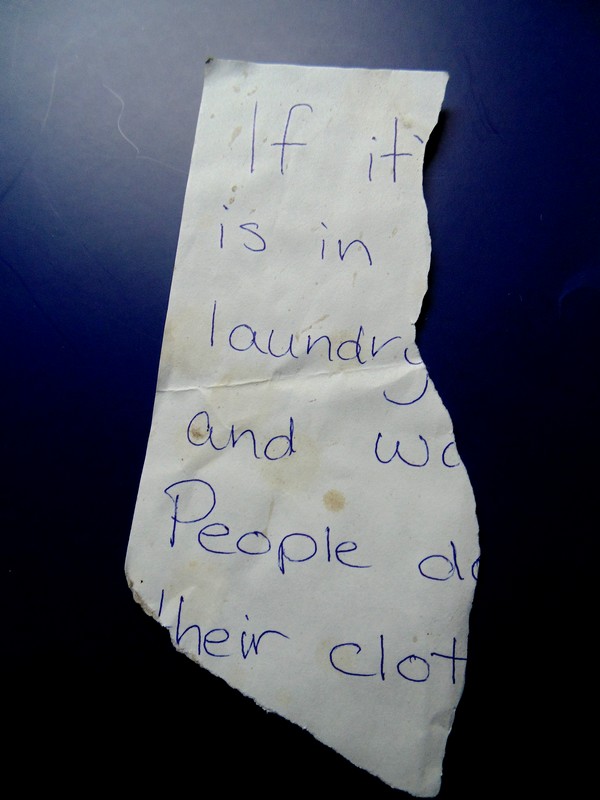
‘Laundry’ was one of the earliest pieces published on this site and I remember being struck with what Anne did to turn a few disconnected words on a torn bit of paper into something I’ve never forgotten — the last line, especially, comes to me often, in all sorts of contexts.

** Laundry, originally published July, 2015.

DSC02830

Hung in a whipping
wind, sheets, freshly washed. Top
sheet bound over and under and around the line,
tangled, while the fitted sheet loosens, snaps. Floats, full-bellied—
Dwindles, sags, diminishes into a body flattened
on a bed of grass

mowed the day before. He finds the pillowcases still pegged side
by side. Holding
air, releasing it. Lungs.

She left this morning, but first she did
the laundry. Put the note
where he’d see it, on the counter by the sink.

If, she said. People, she said.

Anne Simpson is the author of five books of poetry: Strange Attractor (2019); Is (2011); Quick (2007), winner of the Pat Lowther Memorial Award; Loop (2003), winner of the Griffin Poetry Prize; and Light Falls Through You (2000), winner of the Gerald Lampert Memorial Prize and the Atlantic Poetry Prize. She has also written three novels, Speechless (2020), winner of the Thomas Raddall Atlantic Fiction Award; Falling (2008), longlisted for the International IMPAC Dublin Literary Award and winner of the Dartmouth Award for Fiction, and Canterbury Beach (2001). Her first book of essays, The Marram Grass: Poetry and Otherness (2009), delves into issues of poetry, art, and empathy, while her second essay collection, Experiments in Distant Influence: Notes and Poems (2020), is concerned with notions of courage as well as human and non-human community.

She lives in Antigonish, Nova Scotia, where she started the Writing Centre at StFX University.

She can be found at www.annesimpson.ca

♦♦♦

biggest litter peeve:

Simpson — to me, litter seems like a deeper issue than just throwing things out of a car or dropping them in a ditch. It’s a discourtesy—essentially a discourtesy to others and to the world around us.

One of the pleasures of a reading life is how certain pieces stay with us. This is one for me. I adore it for a host of reasons, not least the sly wit, truth wrapped in strained politeness, but also that it reminds me of a process I once went through, trying to say goodbye, using half a note book, each page torn up in turn, before ultimately realizing it came down to a sentence, dropping the key through the letter box, and grabbing a cab to Heathrow. I smile (and cringe a little) at the memory but mostly I love knowing this is how we are, or can be, or have been, women, especially, trying so hard to say, to explain, everything… until we find the courage to say and do the only thing that really matters.

I didn’t remember my Heathrow moment the first time I read this. One of the magicks of re-visiting those pieces that resonate and linger.


** ‘Jay’, originally published, June 2017.

Please re-enjoy!

Jay. I hope you don’t mind that I am just putting the keys in this envelope for you instead of meeting you in person. I know I said I would meet you, but I got a ride tonight so I won’t be here tomorrow after all. I know you said you forgave me, and I really really appreciate it, and I hope you know I really really am sorry for the times I let you down. Also the times you thought I let you down that might not have been actually my fault.

Jay. I am really sorry but I am leaving you the keys here instead of meeting you in person, because I met some guys who can give me a ride most of the way, except they are leaving tonight after their gig (they are a band) so unfortunately I won’t be here tomorrow when you come get these keys. I know that you were pretty mad at me. I really appreciate that you said you would not be mad if I admitted that I didn’t do the stuff I said I would do, which was not fair to you. That is really great. Like, I know I didn’t do the dishes enough and that pissed you off practically every day. So: I did all the dishes before I left! Even the frying pan!

Jay. I’m really truly sorry I won’t be here tomorrow to meet you, but here are the keys. I don’t have the money for the last two weeks of rent because I have to pay these guys gas money, but I’m sure you can find someone to move in on short notice. You can keep my mattress and the clothes in the closet, there are just a few things I couldn’t squish into my bag, I know they won’t fit you but maybe you could sell them. One is my down jacket, the zipper is broken but it’s still really good. You could give it to whoever moves into my room, as part of the deal. If they aren’t vegan.

Jay. I apologize. For everything. I know I said I would meet you in the morning to give you the keys but I am getting a ride with a band tonight – so much cheaper than the Greyhound, only gas and beer money! So I really have to go tonight! I know that in the past me not taking responsibility for my actions was a really big thing for you but since you said if I apologized (really sincerely apologized) (not by text message) you could totally forgive me, I really wanted to be here to meet you and apologize face to face but I have to take this ride. So I hope you don’t mind if I apologize in this note. (This is not a text.) And also I washed the dishes before I left. (I know me not washing the dishes was a thing too.)

Jay. Here are the keys. I’m sorry I won’t be here when we said we would meet, but I have to go. I just have to say I know you were sometimes mad at me but I am basically a good person and it wasn’t my fault that you thought that when we slept together it meant more than it did. I did the dishes. You left a plate and a cup on the counter and I washed them, and the frying pan. (It wasn’t totally fair to say I never did the dishes.) I left you my mattress, I paid $100 for that a year ago on Kijiji so let’s just say that’s $100 of what I owed you for the last two weeks of the month. So if you get someone to move in immediately, you will actually be $100 ahead. Or anyway you’ll have an extra mattress.

Jay. I feel like no matter what I do, it’s not going to make you happy. I know I said I would meet you tomorrow to hand over the keys but I really feel you are going to be mad at me even though you said you would forgive me if I could truly sincerely apologize and take responsibility for my actions, but I think you will actually be happier if I just leave. So with that in mind I have found a ride for tonight so I can’t meet you in the morning, so I am just leaving the keys for you instead. I wish I never slept with you that time because I feel like no matter how many dishes I might have washed or how many times I took out the garbage you would still be mad at me because I’m sorry but I just don’t like you that way, we were both drunk and it was meaningless. I can’t help how I feel, right?

Jay. No matter what I say you will always be mad at me so I’m not going to say anything at all. I am just leaving you the keys.

Jay.

Elise Moser has published short stories; a novel, Because I Have Loved and Hidden It (2009); a YA novel, Lily and Taylor (2013); and a nonfiction book for kids, What Milly Did (2016), which tells the amazing true story of the woman who invented plastics recycling — so the Litter-I-See Project is right up her (litter-strewn) alley! She is a co-organizer of the National Juries and Awards Working Group..

♦♦♦


Biggest Litter Peeve:

Moser:— oh, how to choose just one? I don’t know whether this counts as litter, but if it does: when people throw their still-burning cigarettes on the sidewalk, where anyone, including dogs, might step on it. Cigarette butts, which are made of plastic and take years to decompose, are a related one — people don’t seem to even consider those litter, but they are,

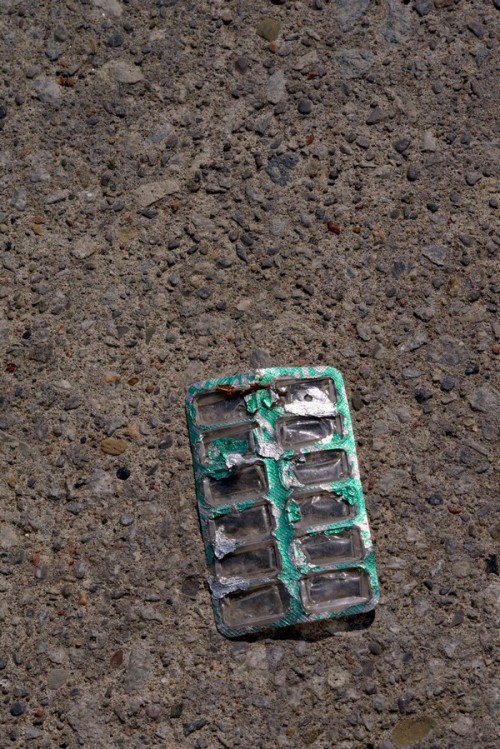
From a picture of an empty gum wrapper, comes ‘xtra care’, the story of a piece of gum tossed into a garbage can on the street, landing on the rim, and being taken, eventually, by a starling to great enough heights to see the beauty of the land before being dropped again on the pavement and being forever changed.

I love the fairy tale quality of this, which reminds me of a series of exquisite chapbooks (The Oldest Cowbird, and The Apple Lovers among them) den Hartog put out in 2023, in the genre she calls Beatrix Potter for grownups. Tiny powerful stories wrapped in a kind of simplicity that sneaks up and astonishes.

Tell me you’ll ever look at gum the same way again.

This is why I continue to run the project. I am honest to god constantly gobsmacked by the alchemy of making amazement from literal rubbish.

** ‘xtra care’ originally published September 2, 2015.

Please re-enjoy.

After he ate his oniony hotdog, he pushed a piece of gum into his mouth. Tasty as the hotdog had been, he wanted something powerfully refreshing to erase it. As he chewed, the gum came to life: zesty, minty, spicy. Twenty minutes later he disposed of it in the garbage, for gum was not recyclable nor compostable, and he cared; perhaps not in an Xtra sort of way, but to a certain extent. He flicked the gum and the empty pack at the stinking, overstuffed garbage can, not noticing as he walked away that the gum had landed on the rim and sat stuck there, a tiny head, watching him go.

All day people passed the fetid garbage can, sometimes flinging rubbish in. Bits of trash tumbled out and merged into the wider city. Bottle caps rolled into the street and were smashed flat like medals won, or coins of unknown currency – something worth something, somewhere. Gauzy produce bags were lifted high and floated until the branches of trees caught them and held them safe from harm. And all through the afternoon and into the dark, quieting night, the little ball of gum sat, as if waiting for the man to return. An emblem of perseverance, of patience. A nod to the everlasting. Gum, after all, was forever.

Come morning, birds emerged before people stumbled from their houses. Flocks of pigeons swooped circles in the sky and then lined themselves up on sleeping rooftops. But it was a starling who landed on the garbage can and jutted its head toward the little ball of gum. Jut-jut, blink-blink. The yellow beak parted and plucked the gum from the bin. Up up up went the gum, clasped tenderly by the bird’s beak.

From above, it was easy to see how the waking world was criss-crossed with delicate bindings that strained to hold it together: roads and rivers and mountain ranges and rows of buildings and lines of cars and banks of wild grasses and hills and valleys of trash that formed patterns indiscernible from down below. Round as the earth, the little ball of gum had never felt less significant, nor more alive, than in those last beautiful moments before he was returned to the street where everything had begun for him. Down down down he was carried. The starling opened his beak and let the little ball of gum fall out onto the pavement, and in no time he had dried and flattened and made a lasting shape of his own. Day after day the people passed over him, including the man who had purchased him and chewed him and somewhat carefully disposed of him. The man never knew of the gum’s journey, and he went whistling through his days until his days ended.

But the gum knew, and would always remember.

Kristen den Hartog is a novelist and non-fiction writer. Her latest book, The Roosting Box: Rebuilding the Body After the First World War, explores war’s profound impact on ordinary people, and the medical innovations and societal changes it spurred. She lives in Toronto and in Lyndhurst, Ontario.

She can be found at www.kristendenhartog.com

♦♦♦

BIGGEST LITTER PEEVE?

Den Hartog: It often occurs to me that “the litter I see” on city sidewalks is garbage for the body as well: chip bags and chocolate bar wrappers and cigarette butts. Things that shouldn’t have gone in in the first place! Though admittedly I’m guilty of the odd junk-food binge….

litter.rogers.1

Following the shore, we pace
out spring. Ring-billed
gulls stitch-swoop the sky.
The kingfisher threads
through the growing stand
of sailboat masts, rattles
a warning.

Bare-shouldered townsfolk
pushing strollers, dog walkers
are also drawn to the lake’s
mirror. Carrying Tim Horton’s,
Starbuck’s cups.

Is that a loon? A young couple asks
as we point binoculars, my husband’s
long lens, at its sleek black head.
I nod, hoping to foster a love
of birds.

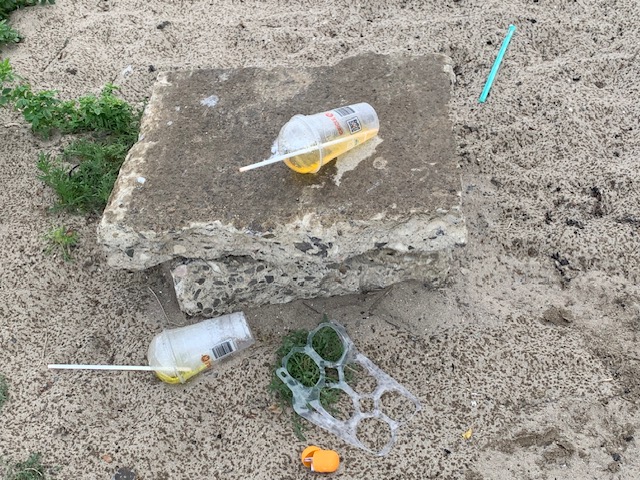
Two plastic coffee cup lids
roll away like forgotten
frisbees.

Where the early loon glides
among still empty boat slips
hunks of ragged styrofoam bob
and plastic water bottles,
an orange traffic cone.

In the corner of the harbour
near the life-saving ring, a mallard
floats upside down. Is that a plastic
six-pack yoke throttling
its bottle green throat?

Last fall, a loon
washed up on the beach.
A hook poked through its
white necklace, maw gaping
with a thrown back fish.

♦♦♦

Kate Rogers won first place in the 2023 subTerrain magazine Lush Triumphant Contest for her five-poem suite, “My Mother’s House.” Her poetry also recently appeared in Where Else? An International Hong Kong Poetry Anthology. Kate’s poems have been published in such notable journals as World Literature Today; Cha: An Asian Literary Journal and the Windsor Review. Homeless City, a chapbook co-authored with Donna Langevin, launched in the first week of January 2024. Kate’s most recent poetry collection is The Meaning of Leaving. She is Director of Art Bar, Toronto’s oldest poetry reading series. More at: katerogers.ca/

Photo courtesy of Kate Rogers.

ghadery


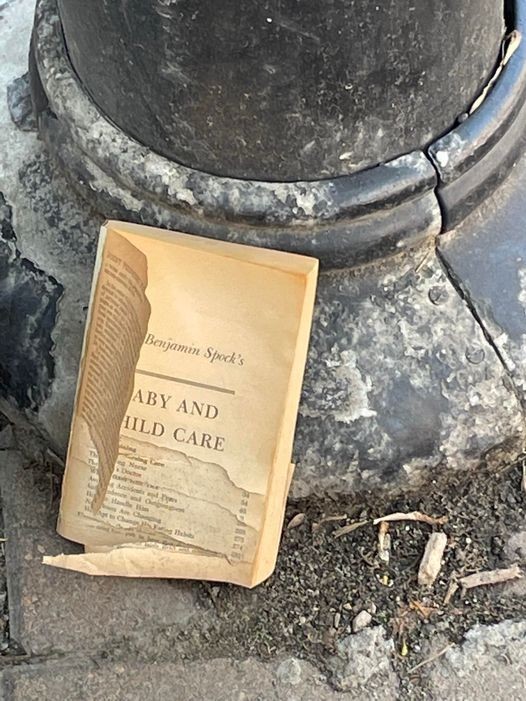
I need this concession: every milestone is an admission of defeat   first smile   first word   first step   first time on a train   first shutting of bedroom door in your face   each seal-clapped celebration   a marker of time  every first   a last  a page curling at the edges   a day we once held each other fast   fetal and milky with sleep

Hollay Ghadery is a multi-genre writer living in Ontario on Anishinaabe land. Fuse, her memoir of mixed-race identity and mental health, was released by Guernica Editions in 2021 and won the 2023 Canadian Bookclub Award for Nonfiction/Memoir. Her collection of poetry, Rebellion Box was released by Radiant Press in 2023, and her collection of short fiction, Widow Fantasies, is scheduled for release with Gordon Hill Press in fall 2024. Her debut novel, The Unraveling of Ou, is due out with Palimpsest Press in 2026, and her children’s book, Being with the Birds, with Guernica Editions in 2027. Hollay is a co-host of Angela’s Bookclub on 105.5 FM, as well as HOWL on CIUT 89.5 FM. She is also the Poet Laureate of Scugog Township. Learn more about Hollay at www.hollayghadery.com

(Image courtesy of Rona Maynard)

(Title, Kahlil Gibran, The Prophet)