Posts Tagged ‘literacy’

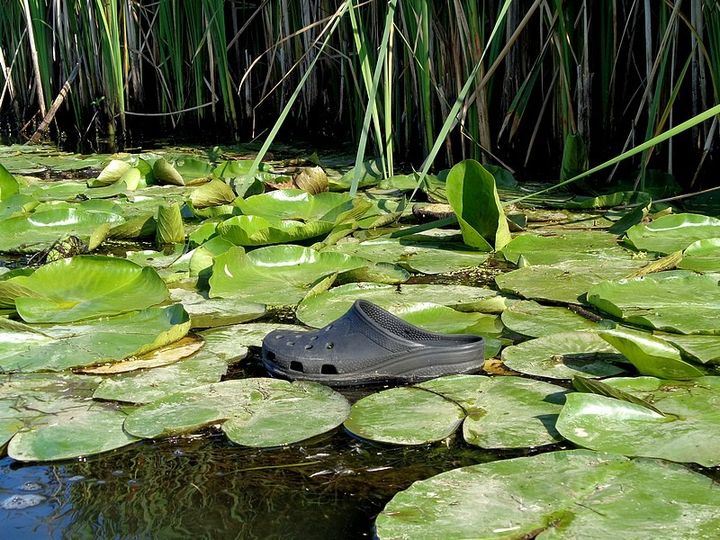
It was scary at first, and hurtful, to be
abandoned. Unmoored, unhinged,
no mate. A fear that all I have left
is entropy, microscopic decline, exhaling
my polyethylene breath, my toxins,
on the napes of my verdant companions,
but I am buoyed by the lilypads’ sibilant
there, there, our rhizomatic exchange.
Look how they embrace the cosmos!
Mired in the ebon deep of the pond, yet
they aspire to the firmament, baring
tender green palms. I trust that, with time,
I can learn from them how to be whole –
how to be not just another empty sole.

Sharon McCartney is the author of eight books of poetry, including, most recently, Hey Trouble and Other Poems (Baseline Press, 2024), Villa Negativa (Biblioasis, 2021) and Metanoia (Biblioasis, 2016). She lives in Victoria, BC.

BONUS… B A C K S T O R Y

I love when a writer is willing to share a glimpse into how a piece of writing came to be. When I sent this photo to Sharon as her ‘prompt’ I expected either poetry or prose in response… she chose poetry then added not only backstory, but a fabulous visual into her process.

“My first thought was poor Croc – where is your mate?! Croc looked so alone out there, floating on the lily pads but, as a loner myself, I know how fruitful solitude can be. So I decided to paint the scene, as a way to explore that. I had recently begun working with a Jungian psychoanalyst, who encouraged me to paint. (Jung was very big on all forms of creativity.) I have never painted in my life... and I have no visual art skills, clearly, but painting is interesting. It’s about letting the unconscious have a hand. What I found with this piece was that the lily pads took over. They’re the focus – the way they straddle darkness and light, feeding on both. As I painted, I found that Croc was the voice I wanted but Croc didn’t need to be in the picture. The lily pads are the way. My analysis is ongoing — I continue to paint and write and unearth..”

~ Sharon McCartney

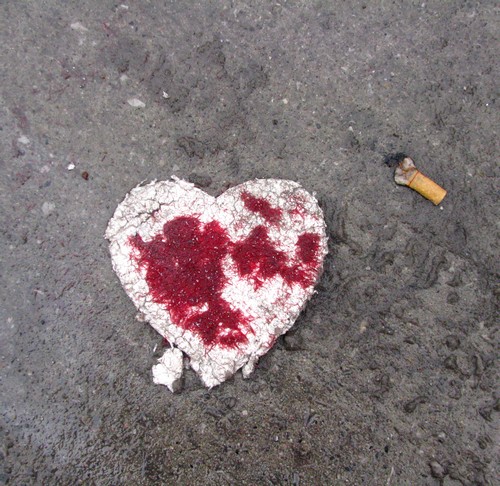
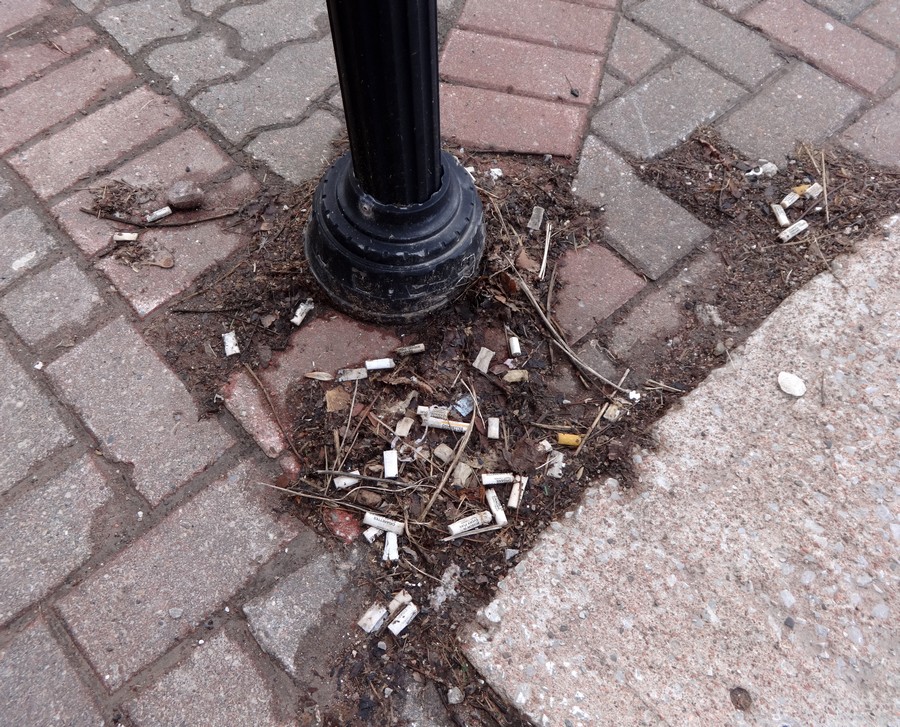
The plastic petal, a perfect drop of blood upon the ground.
One lens snapped, the other whole. The frame in tatters.
Is it light that blinds us? Or the knowledge of that light?
You were with me for so long, then disease stole you away.
The sight of you enough to make me wish for blindness.
Day after day of that. Enough, I said, and threw my sight
away. Like hope. Like all I’d ever wanted, lost.
The unforgiving ground.

It was on a softer ground we poured your ashes,
grey and white upon the soil. The rain dissolved them.
For months I’d watched you, nothing more than bones and fear,
I took my glasses off to wipe my face.
Perfect sparkling tears upon my cheeks.

Carolyn Smart is the author of an award-winning memoir and seven collections of poetry, including Hooked and Careen. She is a freelance editor, founder of the RBC Bronwen Wallace Award for Emerging Writers, and lives in South Frontenac, Ontario. For more than three decades she was Director of Creative Writing at Queen’s University.

Her website is www.carolynsmartediting.ca

Photo courtesy of Christine Higdon.

This is where we escape the bleaching whine of fluorescent lights in language class.

This is where we learn the best places to get warm coats and international money orders.

This is where we learn who’s hiring.

This is where we teach each other how to tell a knock-knock joke.

This is where we share an orange.

This is where we hatch plans for a laundromat business.

This is where we name our restaurant.

This is where we luxuriate in the tongue of our mothers.

This is where we were standing when we learned that father died in the bombing.

This is where we take a deep breath before trying to shape English sounds.

Christine Fischer Guy is a Toronto writer and journalist. She was a 2024 VCCA fellow and is the author of The Umbrella Mender and The Instrument Must Not Matter (coming in 2026). Her short fiction has appeared in Canadian, American and British journals. She was awarded a National Magazine Award and contributes criticism and interviews to literary journals. More: https://christinefischerguy.com/

It’s gone now, buried deep in a midden
or swept down the river: ballracks
and cheek, tympan and gallows, frisket
and forestay: Johannes’ design of 1440.

And the coffin, the box where blackened
type sat, over which he’d lay the platen
to press ink on the vellum, paper made
from the skin of a kid or a lamb softened

in a bath of lime, stretched over a frame
and scraped with a lunellum, a crescent-
shaped blade that removes hair and flesh,
lunellum, yes, from luna, the moon—

can you imagine this? The membrane
of young animals, the moon in someone’s
hand, how deft the skill, thin the vellum,
damp the carbon as a printed page was born.

The allure of our ancestors, right? They had
their day. Me, I’m all toner and cartridge,
gantry and sheet feeder, could do thirty pages 
a minute on a good day. And oh, I had many.

I could join the ancients now, the tide rises so
high, but I cling to this rock, wonder about
my stories and letters now off in the world.
Patient as my forebears, I wait for a word.

~

Lorri Neilsen Glenn is the author and contributing editor of several collections of
poetry, scholarly work and creative nonfiction, including Following the River: Traces of
Red River Women (Wolsak and Wynn) and The Old Moon in Her Arms: Women
I Have Known and Been (Nimbus). Halifax’s first Métis Poet Laureate, she lives and
works in Mi’kma’ki.

Photo credit: Carol Bruneau

On the island of Newfoundland on the southeast tip of the Avalon peninsula in a nearly vacant fishing outport called Beacon’s Lift, there’s a church on the hill that looks out over the whole place and across the North Atlantic. The tide is high, the air is damp and diagonal, and Gord’s square pink house stands its ground like it has for more than a century. But if you were to place your hand on the wall in Gord’s front room, the one with a wood stove and a worn leather daybed and a gilded framed picture of the Sacred Heart, a smaller framed picture of the Angelus, a pair of wool socks hanging over the stove; if you placed your hand on the wall, a stubborn cold would shoot through you, stand up the hair on your arms and neck, shiver your scalp. The howl of the wind through the beams of that house could be straight from the throat of something relentless. And it’s no wonder. It’s no wonder they are always saying the rosary in these parts.

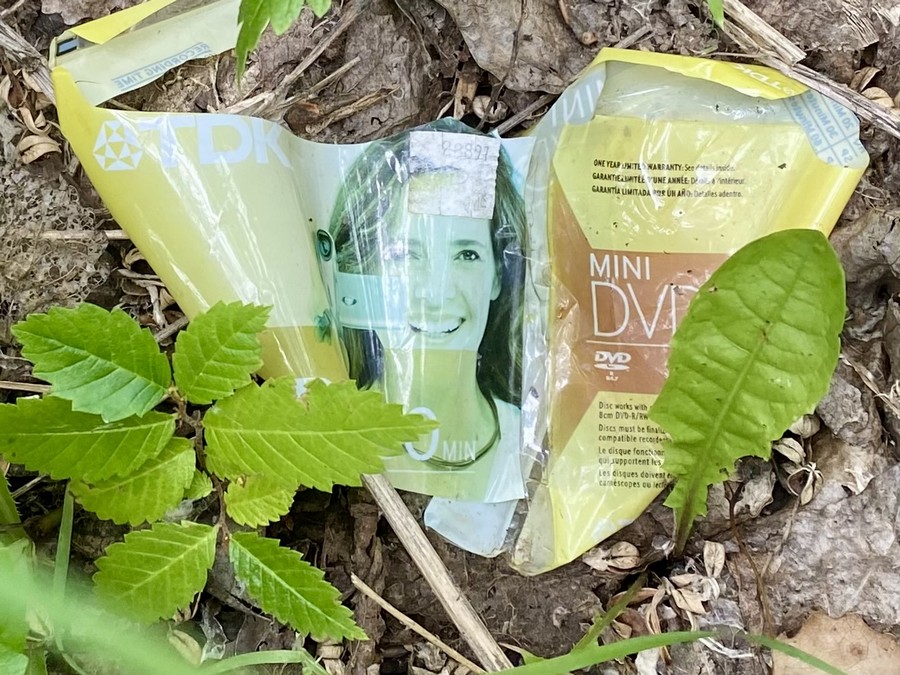
From where did this piece tumble? This bleached face, these bleached teeth with zero minutes. She looks delighted, this one, but I don’t believe her, not for a second. She’s trying to record me, but she’s not looking through the viewfinder. All around her are signs of decay, of rolling right along, of crunchy gossamer underfoot, yet her concern is her teeth.

The new growth appears propped and positioned, like a stand for one of Nan’s fancy plates. The ones she dusts tenderly as if they were dolls.

Fresh, all the same.

Faded, but fresh from flight.

Sara Power is a storyteller from Labrador and a former artillery officer in the Canadian Forces. She completed a Master of Fine Arts in Creative writing at the University of British Columbia. Her writing has appeared in numerous literary journals and anthologies including Best Canadian Stories 2024. She was a finalist for the RBC/PEN Canada New Voices Award, and received a National Magazine Award nomination in the fiction category. Sara’s fiction has won awards from The Malahat Review and Riddle Fence, and has been a finalist at The Toronto Star, The New Quarterly, Prairie Fire, and Fiddlehead. Sara’s first book, Art of Camouflage, is a collection of stories featuring a cast of girls and women caught in the military’s orbit. Originally from Labrador, Sara now lives in Ottawa.

Image courtesy of Angeline Schellenberg.

In this cruellest month,
the icy breeze sparkles
like mica
and hints of glaciers on its breath
as yet another false spring
suffocates under wet snow
as heavy as
three decades of missing you.

A widow’s grief cycles in seasons,
joy brief as summer,
and then too many cold dark days
without your warm grin to turn to,
the sun caught on your freckles,
and in the amber of your eyes.

I ache for you still,
your arms the only true home
I’ve known.
I imagine a life where
we aged together,
celebrated milestones,
laughed about grey hairs
and shared stories –  
a longing as tragic
and futile
as sending messages to Heaven
by balloon.  

♦♦♦

Dymphny Dronyk is a Qualified Mediator and is also a poet, editor, translator, and a story doula. She is passionate about the magic of story and has woven words for money and for love for more than 30 years. She has facilitated unique writing and conflict management workshops across Canada. Her volume of poetry, Contrary Infatuations, (Frontenac House) was short-listed for the Pat Lowther Award and the Stephan G. Stephansson Award for Poetry. She is co-publisher and co-editor at House of Blue Skies Publishing, whose bestselling anthologies include 2014’s The Calgary Project – A City Map in Verse and Visual. Dymphny has served on the boards of the Southern Alberta Brain Injury Society, Writers’ Guild of Alberta, the League of Canadian Poets, and the Creative Nonfiction Collective.

photo credit: Sheree Gillcrist

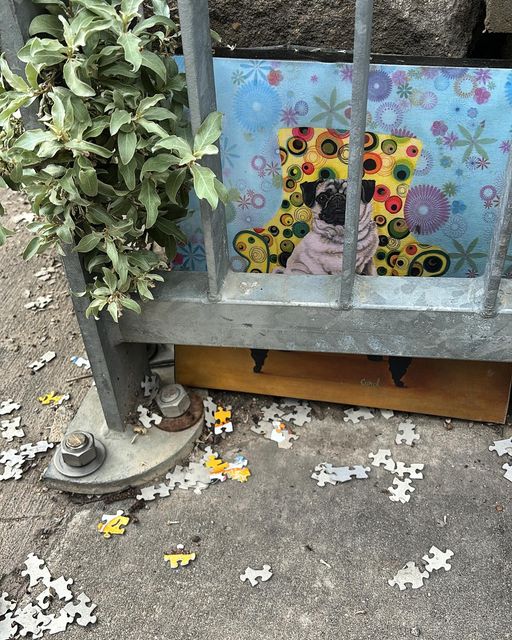
A dropping, a spilling,
a shame. A child
or a grown up who wishes
they hadn’t.
A tut at the ground
and a sigh at the sky,
as you scurry to work,
at the mess, at the waste
of a puzzle that could
have been solved.
Someone might stop
to retrieve all the pieces,
though you can tell
just by looking it’s not whole
and who would have time?
Someone might find
a moment to flip the square
blank board with a toe
to see what’s on the other side,
wince at the ghastly cute pug
someone could probably love,
wonder why the painter played
with such decorative, garish perspective.
You might bend quickly to pick
the picture up, angle it behind
the railings to lean it up out of the rain
that’s one hundred per cent
forecast to fall.

♦♦♦

Joanna Lilley is the author of three poetry books, including Endlings (Turnstone Press) which is all about extinction and won the Fred Kerner Book Award. She’s also published a novel, Worry Stones (Ronsdale Press), and a short story collection, The Birthday Books (Hagios Press). A settler from the UK, Joanna lives with gratitude in Whitehorse, Yukon, Canada, on the Traditional Territories of the Kwanlin Dün First Nation and the Ta’an Kwäch’än Council.

She can be found at www.joannalilley.com

Image courtesy of Leona Theiss.

O ruined piece of nature, this great world
Shall so wear out to naught.

— King Lear, Act IV  

She is savouring her second coffee of the morning. While she sips, her eyes scan the news headlines on her phone. A movement in the garden beyond the glass doors catches her eye. Shafts of sunlight illuminate the pots of annuals they have carefully ceded in the small, private space; bright geraniums, purple pansies, dipladenias and red spikey things she can’t remember the name of. A dragonfly hovers over pink blossoms, and a second one joins it, silently quivering in space. As though unsure of their landing, they alight tentatively and then rise again quickly, darting away. Two thieving squirrels, fattened with raspberries, chase one another along the top of the fence. A maple tree is softly magicking to shades of crimson and umber while an errant leaf drifts lazily down. 

She drops her eyes to glance at the grocery list she has written. Picking up her handbag, she snatches her car keys and leaves for the store. Once in the parking lot, she searches for a drive-through spot. These are her favourite — no tight turns or reversing necessary once she has done the shop. She pulls in quickly and puts the car in park, turning off the ignition and reaching for the requisite quarter. Gulls are circling the area. She hears them clattering before she opens the door, their cries loud and animated declarations.  Exiting her car, she observes a gull walking among the vehicles, a french-fry in its mouth. The reddish marking on its beak looks strangely like a burning ember. Flyers from the store’s weekly circular litter the asphalt, brightly coloured pages fluttering and skittering in the breeze. 

Inside the store, she pushes the metal buggy. The wheel has something stuck in its housing and it veers awkwardly as she attempts to steer. Selecting from the pyramids of fruit, she eschews the available plastic bags and reaches for the mesh ones she has stuffed in her oversized purse. Plump oranges from Florida, shiny lemons from Vietnam, green grapes from California, bananas from Honduras, asparagus from Peru, bok-choy from China. Wrestling with her cart to keep it going forward, she strides awkwardly along the aisles, selecting the items needed to run the household. At the checkout, she carefully places her selections in reusable bags, aware as she does so that the colourful produce is already well travelled. She pushes her cart through the doors and across the garbage-strewn tarmac.  Gulls have now descended on a paper bag and are squabbling over its contents.  

Editor’s note – this piece was written and accepted for publication prior to tariff violations of the USMCA.

Lucy E.M. Black (she/her/hers) is the author of The Marzipan Fruit Basket, Eleanor Courtown, Stella’s Carpet, The Brickworks and Class Lessons: Stories of Vulnerable Youth.  A Quilting of Scars will be released October 2025. Her award-winning short stories have been published in Britain, Ireland, USA and Canada. She is a dynamic workshop presenter, experienced interviewer and freelance writer.  She lives with her partner in the small lakeside town of Port Perry, Ontario, the traditional territory of the Mississaugas of Scugog Island, First Nations. 

She can be found at: www.lucyemblack.com

bill bissett was my first choice to launch this project a decade ago and i was beyond chuffed, amazed, and grateful when he agreed to participate; i remember how truly generous he was, asking if there was anything else he could do (no, but man, so many thanks for that); it was all so new to me at the time, just an idea, a way to give voice and purpose to the schmutz on the street and maybe even bring some attention to whatever we could do to make it a smidgeon less shmutzy, as well as bring attention (and donations) to literacy via what was then Frontier College and who have since changed their name to United for Literacy, still the same organization, Canada’s oldest literacy agency, founded in 1899 as a way for men and women working in remote areas in forestry, mines, the railway, etc., to be exposed to books and reading, a ‘frontier college’ held in tents and whatever other tiny spaces were available.

i met bill only once, at a workshop he held in a tiny space he filled with a whole new world of words. i had no idea what to expect, which is often the best way. i was the first to arrive and looking through the window i could see the room was clearly not set up, all the chairs upside down on tables pushed against walls and a general dishevellment made me think i had the wrong address. but then others started to arrive and then bill did and in we went and whether or not the mess was or wasn’t a surprise to him seemed to matter not one whit and as a group we simply began moving things around and finding a place to sit and that casualness pretty much set the tone for one of the best and most memorable workshops ever.

then again, not sure i can imagine him, or his work, being anything but memorable.

i remain grateful to him for this piece.

** ‘yr littr has arrivd eet it’, first published June 29, 2015.

bissett2

chees poulet spring rollet
dip in2 th pita serious all
th diana huntress maximum
word felt grips sooths n gives
such solace 2 th tomatos n
greens  cum  on ovr n feel th
krinkuld nouns n memoree
care 2 identify aftr onlee 1 look

sew manee adjektivs ar
faltring losing out on
th baseball games n
drowning in th demonstrativs
oftn unmodified n alwayze
ensoucient all trembuls
red eye balls crawling
in th sink

wer they tempestuous n
draftee the vinagret
smile thru the billyard
taybul wuns upon a
pronoun digging

deeplee in2 th
mise en scene ium a
lettralist not a literalist

bill bissett
originalee from lunaria still v
puzzuld by erthling wayze love
dewing sound n vizual poetree
most recent book its th sailors life / still in treetment
from talonbooks n most recent cd nothing will hurt with pete dako

He can be found at www.billbissett.com


Anne Simpson was a happy discovery for me more than a dozen years ago when she was speaking and mentoring at Seawords, a workshop series on PEI (which marked the first time I set foot on the island). And while I’ve loved the magic of the poetic form ever since discovering, as a kid, the Welsh poet-and-occasional-itinerant-tramp, W.H. Davis, in a book my sister stole (borrowed too long?) from the school library, I’ve never tended to collect many collections. Simpson has been an exception from the get-go. Among other things, I’m grateful for the visual artist’s eye she writes with and her deep appreciation of the natural world.

‘Laundry’ was one of the earliest pieces published on this site and I remember being struck with what Anne did to turn a few disconnected words on a torn bit of paper into something I’ve never forgotten — the last line, especially, comes to me often, in all sorts of contexts.

** Laundry, originally published July, 2015.

DSC02830

Hung in a whipping
wind, sheets, freshly washed. Top
sheet bound over and under and around the line,
tangled, while the fitted sheet loosens, snaps. Floats, full-bellied—
Dwindles, sags, diminishes into a body flattened
on a bed of grass

mowed the day before. He finds the pillowcases still pegged side
by side. Holding
air, releasing it. Lungs.

She left this morning, but first she did
the laundry. Put the note
where he’d see it, on the counter by the sink.

If, she said. People, she said.

Anne Simpson is the author of five books of poetry: Strange Attractor (2019); Is (2011); Quick (2007), winner of the Pat Lowther Memorial Award; Loop (2003), winner of the Griffin Poetry Prize; and Light Falls Through You (2000), winner of the Gerald Lampert Memorial Prize and the Atlantic Poetry Prize. She has also written three novels, Speechless (2020), winner of the Thomas Raddall Atlantic Fiction Award; Falling (2008), longlisted for the International IMPAC Dublin Literary Award and winner of the Dartmouth Award for Fiction, and Canterbury Beach (2001). Her first book of essays, The Marram Grass: Poetry and Otherness (2009), delves into issues of poetry, art, and empathy, while her second essay collection, Experiments in Distant Influence: Notes and Poems (2020), is concerned with notions of courage as well as human and non-human community.

She lives in Antigonish, Nova Scotia, where she started the Writing Centre at StFX University.

She can be found at www.annesimpson.ca

♦♦♦

biggest litter peeve:

Simpson — to me, litter seems like a deeper issue than just throwing things out of a car or dropping them in a ditch. It’s a discourtesy—essentially a discourtesy to others and to the world around us.