Posts Tagged ‘frontier college’

hamilton
We dammed their streams and built overtop them then decided we wanted them back. We decided we wanted to rehabilitate what we called “our urban streams.”

It was not possible to count the returning chum in Still Creek behind Canadian Tire because we were 30 feet away, the closest we could get behind the Vancouver Film Studios white safety gates, and they were swimming under water and glare from the overcast sky. In what we with binoculars noted to be a pebble bed, we saw brown tails swishing as the females pitched stones away to form redds; occasionally we saw splashes. It was nothing to watch, except for its significance in a time of natural disasters and pestilence. The side of the stream was just scrub, plastic bags caught on half-dead shrubs, a dead salmon eddying on its side.

A fish swam back from the gravel bed towards us. It was grey and covered in white lesions that looked fungal. These might have been battering wounds; salmon produced a stress hormone to marshal enough energy to make the swim, from open ocean to east Vancouver, to Burnaby, salmon on steroids, leaping uphill, but when they finished spawning, it was that same hormone flooding their cells that killed them.

We were almost at the end of the city, where, in 2006, fry had been released. People then—community do-gooders—wondered if this urban stream, which ducked under roads and buildings, could actually carry the fry out to sea. And here they were, now, finally, life cycles finishing, the worse for wear. People beside me, balding men in caps and women with jaunty ponytails, and kids holding the bars, wondered where had they been?

I consulted diagrams charting chum and sockeye migration routes and reported back that these salmon had probably circled through half the Pacific. How irradiated were they? Were the cankers on their sides possibly radiation burns?

As local scientists had noted, the fish don’t swim anywhere near Japan, although currents travel 10K a day, and so, by rough estimate, it would take 1.25 years from the March, 2011, Daiichi nuclear meltdown for these chum to have swum to irradiated water. It would take 1.25 years from meltdown for those irradiated currents to reach Vancouver.

It was, now, as we stood looking at Still Creek by the white bars of Vancouver Film Studios, 2.5 years from meltdown. People wanted to know: should we be eating Pacific salmon?

We did a little straw poll. Who still ate salmon? Most hands went up. A kid said, “Yuck,” which was how I had felt, too, at his age. But then someone wanted to know whether, aside from radiation concerns, spawning salmon were edible. I said I thought they deteriorated when they left the salt. I said I believed they began to taste like mud.

The child said obviously bears disagreed. And then he pretended he was a bear, moving his hands up into claws. He said, “Grr!”

Jane Eaton Hamilton is the author of eight books of short fiction and poetry. Her memoir Mondays are Yellow, Sundays are Grey, retitled No More Hurt, was a Sunday Times bestseller and included on the Guardian’s Best Books of the Year list. She is the two-time winner of Canada’s prestigious CBC Literary Award for fiction (2003/2014). Her work is included in The Journey Prize Anthology, Best Canadian Short Stories and appears in publications such as Salon, NY Times, Seventeen Magazine, MS blog, Full Grown People, Macleans, Numero Cinq and many others. Her poetry volume Love Will Burst Into a Thousand Shapes came out in fall 2014 and a novel, Weekend, will be released in spring 2016. She is also a photographer and visual artist. She lives in Vancouver.

She can be found at www.janeeatonhamilton.wordpress.com


mayoff

Plugged in to a morning power
walk, the eternal question
buzzes through ear buds:

“Where were you
while we were getting high?”

Caffeine and endorphins
and the usual road-
side distractions: packet of

Zig-Zags, Trojans wrapper,
Mickey D container.

A landscape co-opted by
product placement.
No man

is an island, but every
myth is an oasis

delivering a real-life
litter of karmic detritus to be worked
off. Short

sharp steps zig around
problematic past lives and zag

behind futuristic cloud formations
where the road’s final grade,
while merciful

on the knees, signals
a variation on the playlist’s

soundtrack to ask, How
low can we go?

Steven Mayoff was born and raised in Montreal, lived in Toronto for 17 years, then moved to the bucolic splendour of western Prince Edward Island in 2001, where he writes full-time. His fiction and poetry have appeared in literary journals across Canada, the U. S. and in Ireland, Algeria and France. His story collection Fatted Calf Blues won a PEI Book Award in 2010, was short listed for a ReLit Award and was a Top 5 Finalist for the CBC Cross-Country Bookshelf (Maritime Division) in 2011. Our Lady Of Steerage, his first novel, was released in June 2015 and he is currently working on his first poetry collection Red Planet Postcards.

He can be found at www.stevenmayoff.ca


DSC03026

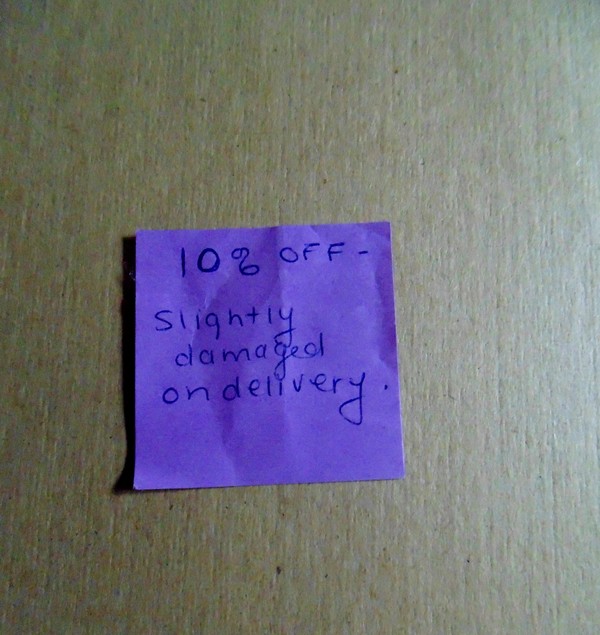
1.  Begin as pie.

2.  Prepare to leave warm fragrant vibes of bakery.

3.  When the moment of departure arrives, don some sort of covering. (Cardboard is a good all-weather choice.)

4.  Travel carefully to a granite countertop in a house with a view and a black Lab named Cecil or Wyatt or Esmerelda.

5.  Be glad you’re not a pork chop.

6.  Sit in cardboard covering on granite countertop, grateful for every minute you are ignored by black Lab (who prays every day that pork chops not pie will arrive on counter) while someone named Charlotte makes dinner, lights candles, pours wine, then drinks most of bottle alone, blows out candles, tips dinner into garbage can while cursing Karl who apparently was supposed to be there at seven but who called at eight seventeen saying he could be there by nine, nine thirty, and was that a problem?

7.  Karl, apparently, is an idiot. He arrives at quarter to ten, at which point Charlotte grabs you (still in your cardboard all-season cover-up) and smashes you against Karl the Idiot’s chest then slams the door. Do not fight the smashing. You are pie, almost useless in this situation.

8. Cringe.  Cringe like mad as you are savoured by Karl (bits of you in his moustache is the worst part) while he stomps back to his car, clutching you to his chest until he’s had his fill then flinging your doughy fruitiness into the shrubbery and, because he can, tearing your cover-up to smithereens. After which he drives off, making that angry peeling tires sound as he goes. He really is an ass.

9.  Prepare for more horror (though not nearly as vile as Karl’s moustache) as CecilWyattEsmerelda presses wet nose on window, whining to be let outside.

10. And Charlotte acquiesces.

11. Soon almost every bit of you will be resting in dog belly, including the cardboard. All but one tiny square. The only proof you ever existed at all.

12. That and dog breath.

13. And, sadly, Karl’s moustache.

When not writing, Carin Makuz  can be found wandering the shores of Lake Ontario muttering about darlings that won’t take a hint. She is a workshop facilitator for abused women and youth at risk. Her work appears in journals and magazines across Canada, the U.K. and U.S., has been broadcast on CBC and BBC Radio and has won the Commonwealth Short Story Prize (Canada and the Caribbean) but, more importantly… she has read on the Eden Mills Fringe stage in the rain. She combines text with photography, reviews books and chats with writers on her blog www.matildamagtree.com