Posts Tagged ‘frontier college’

fallis

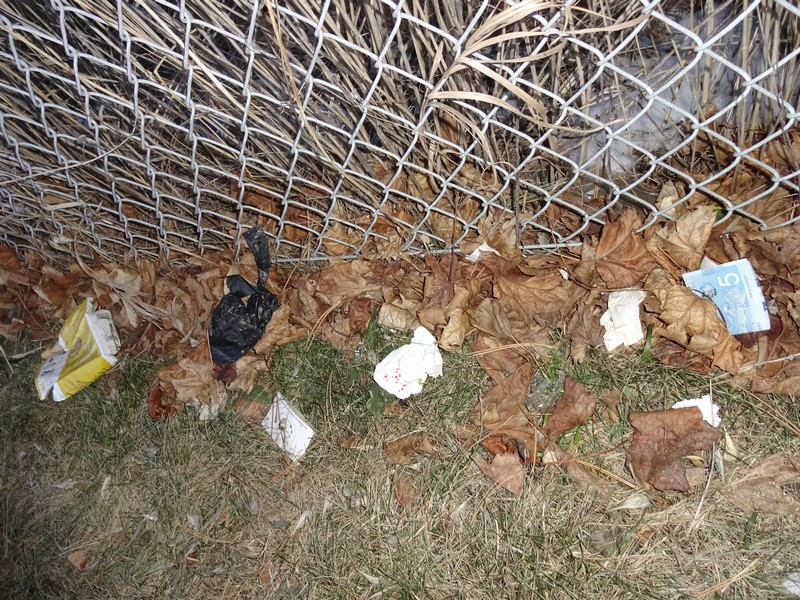
Weather-beaten

Run over

Crumpled up

Flattened out

Stained

Faded

Tenderized

Treasure map of words

Directions to Nirvana

to Oz

to the Holy Grail

to the Lost Ark

to Heaven

to health

to happiness

to…

…Tim Horton’s

Terry Fallis  is the author of five national bestselling novels, including his latest, Poles Apart, all published by McClelland & Stewart. The Best Laid Plans  was the winner of the Leacock Medal for Humour in 2008, and CBC’s Canada Reads in 2011. The High Road  was a Leacock Medal finalist in 2011. Up and Down  was the winner of the 2013 Ontario Library Association Evergreen Award, and was a finalist for the 2013 Leacock Medal. His fourth novel, No Relation,  was released in May 2014, debuted on the Globe and Mail bestsellers list, and won the 2015 Leacock Medal. His fifth, Poles Apart, hit bookstores in October 2015. In 2013 The Canadian Booksellers Association named him winner of the Libris Award as Author of the Year.

♦♦♦

Up Next:

conlin“He is a ghost in this April town…”


rideout

So here’s Donna in hot pink scifi
from an eighties retro-future just trying
to make sense of midnight scrawl the dictates
of dreams or smaller insanities, any attempt
to decode is only a looking for patterns, for story,
our first real inheritance, we place them
everywhere connecting disparate dots. Resistance
is futile Mr. Anderson, repeats and repeats
like a number station, an earworm on the hotline


Tanis Rideout is a novelist and poet. Her first novel Above All Things was a Globe and Mail Best Book and a NYT Editor’s Choice. Her most recent collection of poetry is Arguments with the Lake. She lives and works in Toronto.

♦♦♦


Up Next:

fallis“Directions to Nirvana”


kirton

within the quiet a hum barely audible… is it me?
the earth rotating? the moon pulling or the sun calling?
or is it me? my insides awhir with windmill thoughts
—of the dead or the near dead
David Bowie once said “We are arriving and departing at the same time.”
and I think what of those discarded        dirty
so easy to walk past

I once dated a homeless man
we met at the Friendship Centre
that evening he wore a bone choker
deerskin vest   fringed
long black hair    wavy
bare chest    brown
leather pants
I thought I could smell the ancestors on him
or was it his borrowed clothing     the Hollywood makeup?
he had been in a film that day      so clean
I could feel his spirit    strong    musky
within him a sinewy quiet
and when I closed my eyes I saw him on a horse
on a hill with others
arm raised with a feathered coup stick in hand
he had touched many enemies

I prayed to know him

our first date he took me to English Bay
showed me the beech tree he slept under
sprawling limbs provided cover
green shelter    over grass bed
he tells of rain and how when the downpour comes
he walks    prays all night
a holy man in the city

next time I see him he is in a long black leather coat
an extra in The Crow that day
not always clean        often hungry but he never complained
did not want a home        preferred to sleep outdoors
his place under that beech tree

he had no phone but did call late one night
his arm broken     attacked by the youth on Granville Street
I can still hear him crying on the phone    my young son asleep in the other room
no I cannot pick you up…  no, sorry     you cannot stay here
dating a homeless man is complicated
after dinner you leave him on the corner        rain or shine
he walks away and you hope he stays away from Granville Street


Jónína Kirton A prairie born Métis/Icelandic poet and facilitator currently lives in the unceded territory of the Coast Salish people. Her first collection of poetry, page as bone ~ ink as blood, released in April 2015 by Talonbooks, has been described as “restorative, intimate poetry, drawing down ancestral ideas into the current moment’s breath.”


♦♦♦

Up Next:


rideout“any attempt to decode is only a looking for patterns, for story,”

carter

This is how
she spends

her Saturday,
flipping

through pages
of sale

flyers
until her fingers

are ink-stained,
smudged

with grey silt,
as if she’d been

shucking oyster
shells, turning

the bone-
handled blade

to split
that hard

lip, expose
a rare pearl.


Lauren Carter  is the author of Swarm, described as “a somberly melodic, literary foray” by Booklist and named one of CBC’s Top 40 books that could change Canada, as well as Lichen Bright, a poetry collection. Her prose and poetry have won and been short-listed for several awards, including the CBC Literary Prizes, and anthologized in 15: Best Canadian Stories (edited by John Metcalf). She has recently completed a second manuscript of poetry and is finishing a short-story collection and two novels with the assistance of a major arts grant from the Manitoba Arts Council, at her home in The Pas, Manitoba. Visit her online at www.laurencarter.ca where she blogs weekly about writing and life in the north.


♦♦♦

Up Next:

kirton“I once dated a homeless man that I met at the Friendship Centre”

braid

If only you knew the heart ache of it –
one day immaculate and new
perfectly balanced, filling up

for that bright day
when a young hand would pick me,
thrill of first touch, mouth to wet mouth…

but what happened?
An emptying as kisses cooled

as I caved in slowly, used up, no juice,
then thrown away.

These days I dream of returning to a sea of wellness
and meaning, any abundant source, beauty
to save me, someone to care.


Kate Braid  has written, co-written and edited eleven books of creative non-fiction and prize-winning poetry.  Her next book, an expanded edition of In Fine Form (now sub-titled ‘A Contemporary Book of Form Poetry’) co-edited with Sandy Shreve, will be published in fall, 2016.

She can be found at www.katebraid.com


♦♦♦


Up Next:

carter“This is how she spends her Saturday,”


francis

Alrighty then. First stop is Winners. Or rather, HomeSense. Why did Claire get me a lemon zester? Do I look like a person who zests lemons? Have I ever once said anything about zesting a lemon? She doesn’t know me. Never has. Costco is going to be a nightmare, all those restaurant people buying buckets of olives and muffins the size of baby heads. I’ll pick up one of those rotisserie chickens for dinner. Then to Chapters for Conrad Black’s book. I don’t know why Glen wants it. The last thing he read was a Reader’s Digest in 1986. Maybe he’s entering some new stage. The other day, he said he’s going through manopause and roared his face off. I’ll pick him up some panty liners. See how funny he thinks that is. The Conrad Black book better be 40% off. Maybe I’ll get something for me. A mystery. I could use more of that in my life. Oh, right. Don’t forget to look for a glass jar for the chocolate sauce while I’m at HomeSense. Something old-fashioned looking. I shouldn’t have made the sauce. I don’t know what I was thinking. I’ve gained two pounds since Saturday. Speaking of obesity, why can’t Lyn buy her own knee highs? God, my wallet is falling apart. I need an address book, too. Does address have one d or two? My mind is everywhere except where it needs to be. I just hope I don’t lose this list.


Brian Francis  is the author of two novels, Natural Order and Fruit. He writes a monthly advice column, “Ask the Agony Editor,” for Quill and Quire magazine and is a regular contributor to CBC Radio’s The Next Chapter.

He can be found at www.brian-francis.com


♦♦♦

Up Next:

braid“thrill of first touch, mouth to wet mouth…”


mayer

Grocery shopping as a child with my mom was usually a let-down.

To a kid looking for her next junk food hit, trips to the supermarket were filled with stonewalled requests to get my mom to stray from her shopping list; to buy me something sweet, something salty — something bad. But she held fast in her German stubbornness that I’d be better off with an apple.

She wouldn’t budge to the beckoning of the cartoonish pink monster on the boxes of Frankenberry cereal. I so desperately wanted to befriend that guy over a bowl and some milk. In a rare weak moment, she occasionally wavered for big-billed Toucan Sam, but I can count those times.

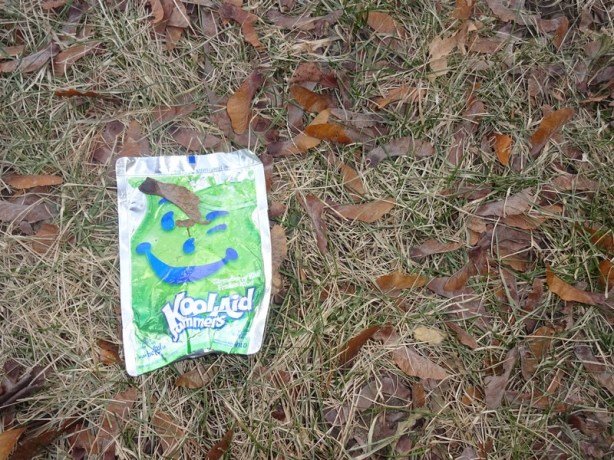
If anything got a pass, it was potato chips, her personal weakness. Salt and vinegar and barbecue secured prime real estate in the snack cupboard until mindlessly munched while watching Miami Vice or The Love Boat. I grew up knowing the Hostess Munchies far better than I would ever know Count Chocula. I also never had the pleasure of winning a battle begging for Kool-Aid. My mom remained unsmiling when faced with Kool-Aid Man’s grin, but she always made room in the shopping cart for the pulpiest, tartest orange juice concentrate she could find.

“It’s real juice,” she told me. “There’s nothing good in Kool-Aid.”

I refused to believe her. Instead I’d get my fix of the Kool-Aid Man’s technicolor offerings at friends’ homes when I’d go over to play with toys I wasn’t allowed to have either… like Barbie (she was the wrong image to be thrusting on young girls) or G.I. Joe (he was too violent).

My best friend, the boy who lived down the street, always had “freshie” in the fridge, Star Wars action figures at the ready and the Beastie Boys ‘Licensed to Ill’ in heavy rotation. His was the coolest house on earth in my world. All I could offer in return was Play-Doh and that pulpy orange juice, so we usually wound up at his place.

As we got older, those play dates became less frequent and more awkward, eventually reduced to going over and checking on his cat when his family went on vacation. I didn’t drink the Kool-Aid that may have been left in his fridge but only because it would have seemed too obvious that I strayed from my task of indiscriminately dumping Friskies into the cat’s bowl.

By the time I got my driver’s licence my mom was happy to send me to the grocery store with her shopping lists. (As it turns out, she’d never enjoyed those trips much either.) Oh, the thrill to be set free in the aisles where my old sugary friends-in-waiting lived! No one to scrutinize my choices. So down the aisle I went, giddy with excitement to visit Kool-Aid Man—and when I was scolded for bringing him home, I already knew what my answer would be. “Sorry, Mom, you just said juice. You didn’t say what kind.”

His perch on the shelf was right at eye level and I wanted to hug him. But after getting through all the formalities of the proper introduction that eluded us so many times before, I studied him carefully. What was so bad about this guy anyway, with his girth and kindly features…?

I turned him over and read the fine print on his back. That’s when I saw it, the part about adding one cup of sugar—one cup of sugar!—when whipping up a pitcher.

My nose wrinkled.

“Oh my god,” I said to Kool-Aid Man as if I’d just discovered the Beastie Boys were lip sync-ers.

I put him back on the shelf and headed for the orange juice.


Tiffany Mayer  is a journalist and the author of Niagara Food: A Flavourful History of the Peninsula’s Bounty (History Press, 2014). Her mom’s grocery shopping tips stay with her to this day. (As does a love of the Beastie Boys thirty years after first hearing Brass Monkey over an illicit glass of grape Kool-Aid in her best friend’s bedroom.)

She can be found at eatingniagara.com

♦♦♦


Up Next:

francis“I’ll pick him up some panty liners. See how funny he thinks that is.”

westhead

My husband is the type of man who consistently abandons loaves of bread on top of the refrigerator, which, as any sane, thinking individual should know, increases the internal temperature of said bread, thereby rendering it much more hospitable to floating mold spores, which thereby render it disgusting.

Furthermore, my husband is also the type of man who will consume all of his wife-and-helpmate’s chips and will then add further unchivalrous insult to grave injury by neglecting to replace those chips, leaving the helpmate desperate and alone with her tormented innards twisting in response to her terrible, unquenched salt cravings.


Jessica Westhead’s  fiction has been shortlisted for the CBC Literary Awards, selected for the Journey Prize anthology, and nominated for a National Magazine Award. She is the author of the novel Pulpy & Midge (Coach House Books, 2007) and the critically acclaimed short story collection And Also Sharks (Cormorant Books, 2011), which was a Globe and Mail Top 100 Book and a finalist for the Danuta Gleed Short Fiction Prize.

She can be found at www.jessicawesthead.com


♦♦♦

Up Next:

mayer“My mom remained unsmiling when faced with Kool-Aid Man’s grin,”

carpenter

Her problem with cleaning up clutter was always not knowing how to start.  Should she clean up the junk-laden backyard first?  Clean up the living room? The kitchen?  Maybe the kitchen.  It was always full of stacked and dirty dishes, and whenever she wanted to fix a meal she would wash whatever she needed and re-stack them dirty in the sink or wherever.  For many years she’d had a job as a sales clerk in the basement of the Army & Navy, and what the hell, a girl got tired after a day’s work.  She’d earned the right to put up her feet and have a beer.

Each pile of rubble, each abandoned project, was a monument to failed love.  Whatever smells lingered from the mildewed recesses of the heaps, they were intertwined with the memories of this or that lowlife, this or that con artist husband, this or that reclamation project gone wrong.  Peg’s record player, later her stereo, later her boombox,, moaned, as did the house itself, with the laments of lost love.

Some of her men left gifts behind, a collection of china unicorns, a shelf full of dolls, a large array of fancy candles that never saw a match, dozens of midway prizes in plastic bags in the living room, the basement, the corners of rooms.  The stacks of junk grew so high that Peg and her bewildered boy Jerry had to navigate around them on pathways shovelled out between heaps of discarded things.

Everywhere throughout the house lingered the sad stench of cigarettes, uncertain plumbing, discarded food, cabbage and boiled coffee, soured milk, damp newspapers and rotting wood.  As fast as Peg abandoned the gifts left behind by the brief husbands and boyfriends, young Jerry abandoned the toys they had brought for him.  A set of drums found a special place for several weeks in the living room amid islands of junk and when Jerry lost interest in them, waves of abandoned refuse gathered around them, forming a new atoll.


David Carpenter  has worked as a translator and critic and is the former Fiction Editor of GRAIN Magazine. He is the author of several novels, a collection of poetry, and the award-winning Welcome to Canada (Porcupine’s Quill, 2010). Other  non-fiction books include Courting Saskatchewan and A Hunter’s Confession… and a collaboration with an old Cree trapper and hunter: The Education of Augie Merasty (University of Regina Press, 2015), one of the few books that recounts first hand experience of a residential school. Carpenter recently won the Kloppenburg Award for Literary Excellence. He lives in Saskatoon.

♦♦♦


Up Next:

westhead“much more hospitable to floating mold spores,”

gone

Posted: March 17, 2016 in amy jones
Tags: , , , ,

jones

You thought it would be a good idea to have extras. Napkins, straws, little salt packets strewn all over the car between St. Louis and Oklahoma City. We ate French fries out of cardboard containers stuffed into cupholders, fast-food burgers dripping mayonnaise and pickle juice onto bare tanned legs, ice melting into our fountain pop.

“In America we don’t call it ‘pop,’” you said. I didn’t ask you any questions, I had learned things were better that way. Later I fell asleep and when I woke up we were parked somewhere outside Amarillo, you sitting on the hood of the car smoking a cigarette, staring out into the shimmering Texas twilight.

Six years, four cities, thousands of kilometres. A dozen other lovers and “In America, we don’t call them kilometres,” I can still hear you say. I reach beneath the drivers’ seat feeling for a lost quarter and at first I think my hand has been cut, bloody red gore smeared across my palm, between my fingers, under my nails. A ketchup packet, an artefact excavated from the dry, dusty plains of my past. I touch it and I remember, like an electric shock. The smell of your shaving cream. Your hand on my leg. What seemed like an endless road.

I roll down the window. And I let it go.


Amy Jones  is the author of the short fiction collection What Boys Like and Other Stories (Biblioasis) and the forthcoming novel We’re All In This Together (McClelland & Stewart, June 2016). You can find her on Twitter @amylaurajones.

♦♦♦


Up Next:

carpenter“Some of her men left gifts behind, a collection of china unicorns, a shelf full of dolls…”