Posts Tagged ‘frontier college’

bill bissett was my first choice to launch this project a decade ago and i was beyond chuffed, amazed, and grateful when he agreed to participate; i remember how truly generous he was, asking if there was anything else he could do (no, but man, so many thanks for that); it was all so new to me at the time, just an idea, a way to give voice and purpose to the schmutz on the street and maybe even bring some attention to whatever we could do to make it a smidgeon less shmutzy, as well as bring attention (and donations) to literacy via what was then Frontier College and who have since changed their name to United for Literacy, still the same organization, Canada’s oldest literacy agency, founded in 1899 as a way for men and women working in remote areas in forestry, mines, the railway, etc., to be exposed to books and reading, a ‘frontier college’ held in tents and whatever other tiny spaces were available.

i met bill only once, at a workshop he held in a tiny space he filled with a whole new world of words. i had no idea what to expect, which is often the best way. i was the first to arrive and looking through the window i could see the room was clearly not set up, all the chairs upside down on tables pushed against walls and a general dishevellment made me think i had the wrong address. but then others started to arrive and then bill did and in we went and whether or not the mess was or wasn’t a surprise to him seemed to matter not one whit and as a group we simply began moving things around and finding a place to sit and that casualness pretty much set the tone for one of the best and most memorable workshops ever.

then again, not sure i can imagine him, or his work, being anything but memorable.

i remain grateful to him for this piece.

** ‘yr littr has arrivd eet it’, first published June 29, 2015.

bissett2

chees poulet spring rollet
dip in2 th pita serious all
th diana huntress maximum
word felt grips sooths n gives
such solace 2 th tomatos n
greens  cum  on ovr n feel th
krinkuld nouns n memoree
care 2 identify aftr onlee 1 look

sew manee adjektivs ar
faltring losing out on
th baseball games n
drowning in th demonstrativs
oftn unmodified n alwayze
ensoucient all trembuls
red eye balls crawling
in th sink

wer they tempestuous n
draftee the vinagret
smile thru the billyard
taybul wuns upon a
pronoun digging

deeplee in2 th
mise en scene ium a
lettralist not a literalist

bill bissett
originalee from lunaria still v
puzzuld by erthling wayze love
dewing sound n vizual poetree
most recent book its th sailors life / still in treetment
from talonbooks n most recent cd nothing will hurt with pete dako

He can be found at www.billbissett.com


pripich

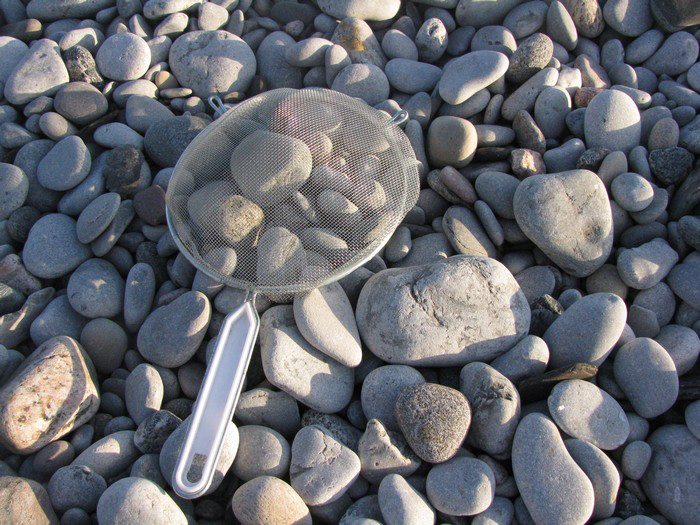
Days past I chased butterflies, enticed
by vibrant colour, mesmerized
by random motion, lured
by metamorphic possibilities of flight.

What is a butterfly but winged contradiction,
patterned unpredictability aloft?

I rest / come to ground / gather stones.

Stones too entice, with
muted colour, with
stillness, metamorphic
possibility.

Paradoxical: a stone
may be volcanic while inert, a mountain
or a grain of sand.

Scoop / fling / stones too can fly.

Leslie Prpich chases butterflies around an unruly garden on the rocky banks of the Skeena river in northern British Columbia. She writes creative nonfiction, occasional poems, and combistories, some of which can be found at www.commatology.com


fitzpatrick

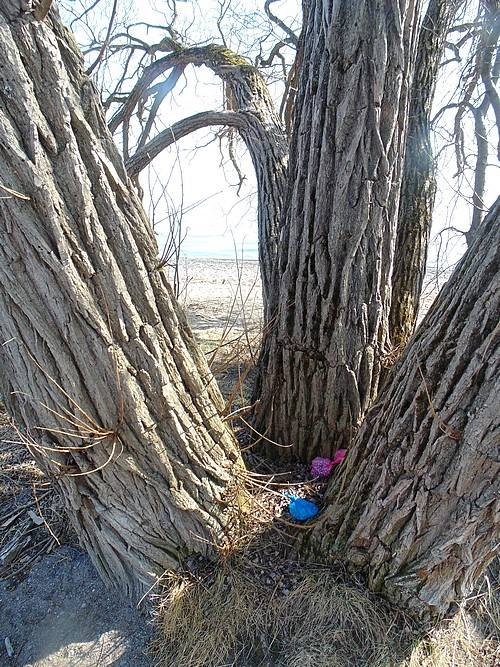
The sea beckons, hazy white expanse of slippery, glistening rocks, assembled hodge podge – we make our sloppy, tenuous way. Picking paths from the sides of ancient stones. View from these wild old trees, a family of three – it is an enticing mirage. In the end, we didn’t get there. We sweated and swore, didn’t we, and finally unpacked our lunch and ate in the sun, crunched on slimy rocks. Crabs skittled and it was like the sea was seeping up, pincers poking us – wake up from the dream that is the sea – was the message. Sandwiches soggy, smushed apple slices in bags and candy wrapped in blue and pink foil, intact and perfect in our mouths.

These trees watched us stagger out, squabble, stagger back. Decades they have watched the dreamers venture, toil, despair, come back to the refuge of trunks, branches, their conversation deep underground tingling up my legs. I stand in the centre as you wander off, looking for an easier way. Gazing up as the trunks and branches wend grey sinew ribbons in the sky. A holy place and a place to stash junk in Easter colours, like presents, bright oval eggs. Secret refuse in pretty packages that maybe no one will see – that may have floated in from the sea.   

Adrienne Fitzpatrick grew up in the north and returned to complete her Masters in English at the University of Northern British Columbia; her creative thesis won the John Harris Prize for the best in Northern Fiction. Her fiction and poetry have appeared in Prairie Fire, CV2, subTerrain, The New Quarterly and Thimbleberry. Her art reviews have appeared in Border Crossings, C Magazine and Canadian Art and book reviews in the BC Review. She explores the phenomenological experience of place in her work and her first book, The Earth Remembers Everything is based on her experiences travelling to massacre sites in Europe, Asia, the Central Interior and Northwest Coast of BC; it was also short-listed for the 2014 George Ryga Award for Social Awareness in Literature. Instructions for a Flood, based on her experiences of living and working with Indigenous Nations in the Central Interior and Northwest of BC, came out from Caitlin Press in May 2023.

mockler

When the sun goes down, close your eyes, and I’ll tell you a story.

It’s a story about a wave—a big one, the kind that threatens an undertow if you’re not careful.

This is not advice but a warning.

In this story, I will be a stone, and you can be a seashell or a fishbone or the head of a plastic doll with blue hair someone’s child left behind. On the ride home, when the child remembers the doll, his favourite doll, whose head he gleefully ripped from its body and tossed aside, he cries out—a long and remorseful cry—but it’s too late to turn back now and retrieve it.

The trick, if there is one, is to wash up on the shore and not get dragged down to the bottom of the ocean.

Sometimes the water is calm, but not today, not in this story.

Yes, of course, if you want to be a grain of sand, then be a grain of sand, but you won’t necessarily fare any better.

Kathryn Mockler is the author of the story collection Anecdotes (Book*hug, 2023). She co-edited the print anthology Watch Your Head: Writers and Artists Respond to the Climate Crisis (Coach House Books, 2020) and is the publisher of the Watch Your Head website. She also runs Send My Love to Anyone, a literary newsletter. 

litter - simmers

Bunched like discarded tissue,
origami kisses blown to profit, companies,
the ssible ink of capitalism.

The news unspooled like a mixtape, words
weathered into sun and wind, all dep, ould, edia
come spring. Paper returning to the pulp

from which it was formed. Until, over, ahead—time’s
obscene political leanings, how it exists outside
the frame. And within in it. Post-hurricane

sandstone coastline cartwheels into the sea.
Note the pale green fossil layer—prehistoric
footprint exposed by storm surge.

Fossil or rock? Give it a lick.
Decomposed inorganic minerals
from bone will stick to the tongue. Gather

the jou left and assemble into sense:
people the millions on the page.
Radio something new.

Bren Simmers is the winner of the 2022 CBC Poetry Prize and the author of four books including the wilderness memoir Pivot Point (Gaspereau Press, 2019) and If, When (Gaspereau Press, 2021). She lives on Epekwitk (PEI).

www.brensimmers.com.

gagliese

Welcome to our little cul-de-sac. Your family’ll be happy here. It’s quiet, and most folks are friendly. You’ll learn soon enough who isn’t.

Well, since you ask, just between us, number 103, right across the street.

Happened last night, about midnight, my wife fast asleep. The guy who lives there starts shouting. He’s this big bear of a guy, radio-announcer voice.

No, don’t worry, they can’t see us; their curtains are drawn. Besides, likely still in bed. Mrs. Saunders, her backyard abuts theirs, says they aren’t what you’d call morning people. But he’s been ill, so—

No, don’t know exactly. Lots wrong with him, apparently. Regardless, last night, he was in fine form. I hear his booming voice. Angry, vile words. I step out onto my porch, just in case.

No, there’s never been trouble before, but that doesn’t mean there won’t be. Anyway, I’m out there in my robe and so is he, bigger than ever. His wife’s cowering in the doorway.

No, he didn’t see me. So, he’s holding this basket, throwing slippers from it. My wife thinks it’s probably the one they keep for company. Not that they ever have company, not even my wife anymore, not since he called her a nosy hen. So, he’s throwing slippers, bellowing. He stops, says something I can’t hear, and she, no kidding, she kneels in front of him and takes his slippers off his feet.

No, I tell you, I saw it plain as day. The porch light was on. Those are his slippers there – grey flip-flop and brown loafer. Mismatched because they say he’s got one foot that’s hot and one that’s cold. Flip-flop cools, loafer warms.

No, no clue what causes that. Doesn’t matter. As I was saying, she hands him the flip-flop. He throws it. The loafer, same thing. Then she yanks off her own slippers, the red booties right there, and he throws those, too. By now, I’m about ready to call the police. Seems to me, he’ll go after her next, and she’s nothing but a slip of a girl. At least a foot shorter and two hundred pounds lighter than him. But I’m wrong. In an instant, I swear, he seems to deflate, this giant. I’ve never seen anything like it. He’s crying, wailing, sobbing. A man that size.

Great question. Well, my wife or yours would be packing. But not her. She’s been his nurse too long for that, my wife explained this morning. Sainted, she said, never a thought for herself. Instead of giving him what for, she wipes his tears, or so it looks from a distance. She caresses his face, anyway, and he leans into her, arm around her shoulders, his weight on her. They stand there like that for a bit, bare-footed mind you, and then she guides him indoors. Soon, all the lights are out. Show’s over.

I assume she’ll be out to gather them up. But you have a point. In this neighbourhood, we do leave unwanted stuff by the curb for anyone to take. On second thought, go ahead. Help yourself, take a pair, take two. Good as new after a wash.

In fact, my wife might like these moose slippers.

♦♦♦

Lucia Gagliese’s stories have appeared in Best Canadian Stories–2021, The New Quarterly, This Will Only Take a Minute (Guernica), The Healing Muse, and others. She is a clinical psychologist and professor at York University in Toronto.

Photo credit: Alice Zorn


How this site works is that I send a photo of a piece of litter to a writer somewhere in Canada and they respond in any form.

Those are the instructions: you may respond in any form.

Most often it’s poetry or short fiction or personal essay. On a few occasions the response is another image. Debbie Ridpath Ohi and Kevin Sylvester come to mind. In the case of Marthe Jocelyn, she asked if I could send, not a picture but an ACTUAL PIECE OF LITTER so that her response could be something (litter-ally) made from the object. I tried to find something that a) wasn’t overly disgusting, and b) easy to mail.

The litter gods were kind.

This is what I found.

I popped it in the mail, not beginning to imagine what it would become.

may 3-2

This is what happened next.

litter - jocelyn

“Visual Literacy is an earlier & more intuitive skill than reading; kids recognize faces, objects, pictures, and logos, long before they can understand text. Visual literacy inspires the same interpretive skills that reading eventually will — to find meaning (and humour) in what you see.” ~ Marthe Jocelyn

Marthe Jocelyn has written — and sometimes illustrated— fifty books for young readers. Her pictures are collages made of paper, fabric, and found bits & bobs. She has lived mostly in New York City and Stratford, Ontario. 

Website: marthejocelynbooks.com

Instagram: @scissorhouse

♦♦♦

torn

Posted: April 8, 2022 in kim fahner
Tags: , , , ,

fahner

Use your teeth. No need for scissors. Grab a hold of it, by the corner maybe. Bite down. Tear. Don’t be precious about it. Or, instead, use scissors on the top, and then let the dog rip at the bottom. What you want and can’t have, so now want it more. Love. Peace. Fill in your own blank as needed.

The bottom’s fallen out, or it’s been ripped out. Is it just the bag, your life, or maybe the whole world?

Upended, so that everything falls out all at once.  

On the news, images cluster: the shell of a school, burnt out, in Kharkiv; an old man feeding four cats from one can of stew, spooning it onto the pavement with care; children in the Krakow train station being given balloon animals to comfort them after long journeys; women weaving a camouflage net onto a chicken wire frame; a wedding in a war zone, bride and groom both khaki clad—holding roses in their hands, so hopeful.

Here, somewhere in Canada, a bag with the bottom ripped out. Left behind.

Here, and there, the world ripped open, so torn apart.

Scatter rose petals. Try hard.

Then, try harder.  

Cultivate peace through protests and poems.

Imagine the scent of rosewater, distilled from the essence of Ukrainian wedding flowers.

Then, think of hope, and of how peace blooms much too slowly in the spring of yet another pandemic year. These patterns, how you wish they could be broken. Not to be repeated.

Kim Fahner writes and lives in Sudbury, Ontario. Her most recent book of poems is These Wings (Pedlar Press, 2019) and her new book of poems, Emptying the Ocean, will be published by Frontenac House in Fall 2022. Kim is a member of the League of Canadian Poets, the Ontario Representative of The Writers’ Union of Canada, and a supporting member of The Playwrights Guild of Canada. She may be reached via her website at www.kimfahner.com

♦♦♦


regehr

Steal her toothbrush because it tastes like her sweet minty mouth. Steal her roll-on her fruity shampoo duo body wash face cream liquid liner perfect peach lipstick steal the air out of her whole morning routine. Slip off her pillowcase pj boxers stashed inside swipe the pair of freckled frogs off her alarm clock steal all her bras because we wear the same size—her silk on my skin lace on my skin threadbare polyester on my skin. Steal her love-worn scarf her felt fedora with its sweat-stained inner rim steal Mary-Janes buckle the buckles kiss the soles steal hairbrush from nightstand choked with brown curls pocket the train flattened lucky penny from her ring dish wanting the same dark luck. Think about wet roads high-heeled think about frozen cheesecake grocery store bouquet think about human-body-as-rag-doll flung think about tulip art on asphalt tires rolling over buds—mentally collect each bruised and torn petal each crushed stem. Wander around touching everything with shaking hands touching everything eat the sushi leftovers think about her parents touching everything boxing the apartment every side-of-the-road saucer every mismatched wine glass—not knowing me from a neighbour. Steal her lip-printed coffee cup sort the sleeve of Sharpied mix-cds burned by an old lover press play on our songs cry over Bob Dylan’s Lay Lady Lay even though it’s not our song cry over all the songs that are not our songs then steal the CD. Steal the sofa blanket watch half a box of sodden Kleenex scatter kneel to collect my tears steal the wilting fern from the windowsill her namesake. Pack-n-stack it all neatly in a tote snatch her black cherry room spray good for cannabis cover-up—watch in slow motion as the lid flips off and Scent-Bombs the lot.

BIO:

Kyeren Regehr is the author of Cult Life (Pedlar Press, 2020), shortlisted for the ReLit Awards, and Disassembling A Dancer (winner of the Raven Chapbook contest, 2021). She spent several years on the poetry board of The Malahat Review, and presently works as a freelance creative editor and mentor. She has thrice been longlisted for the CBC Poetry Award and her work has been published in anthologies and periodicals in Canada, Australia, and the U.S.A. kyerenregehr.ca

Author of Cult Life, Pedlar Press, 2020

https://www.kyerenregehr.ca

Disassembling A Dancer, Raven Chapbooks, June 2021

pare (2)

No rabbit is born singular
all rabbits are soft all rabbits are tough
no rabbit is safe
this is a fact
of life in a wild warren fluffle
or in a drove or in a husk if a rabbit is
in fact a hare
or alone on a heap no rabbit is safe alone on a heap
even wearing a jumpsuit of pale chenille

with sufficient blow any cloud could become camel or dove
with sufficient threat any woman might be made fearful
with sufficient thread
any rabbit can be made to wear clothes
abracadabra a form of elision
far from the original litter
some rabbits become raddled
if clothed if stuffed if a form of plush toy
no life is safe from transition
if left out in the rain some nights in row
if stitched up and made to wear
a threaded fixed smile


Arleen Paré is a Salish Sea writer with seven collections of poetry and a new chapbook being released this year. She has been short-listed for the BC Dorothy Livesay BC Award for Poetry, and has won a Golden Crown Award for Lesbian Poetry, Victoria Butler Book Prize, a CBC Bookie Award, and a Governor Generals’ Award for Poetry. She lives in Victoria with her wife, Chris Fox.

Photo Credit: Christine Higdon