rash talk

Posted: July 20, 2015 in penn kemp
Tags: , , , ,

kemp

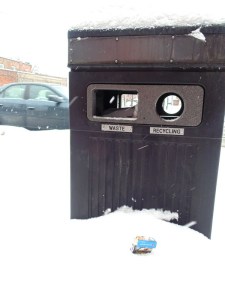
Litter begets
more litter—

ah, sure when
litter it, we re
itter ate it.

I / it
lit

light
litter

along
the literal
littoral.

The ill litter it
refuse refuse
and garb age.

I utter a light
little iteration

against litter
alluding to

allusion, all
iteration and

assonance off
the road, on

the road and in
to ash, rash,

trash
can.


London ON performance poet, activist and playwright Penn Kemp is the 40th Life Member of the League of Canadian Poets and their 2015 Spoken Word Artist of the Year. She received the Queen Elizabeth II Diamond Jubilee medal for service to arts and culture. As  inaugural Poet Laureate for the City of London (2010-12), she presented poetry at many civic functions. As Canada Council Writer-in-Residence for Western University for 2009-10, her project was the DVD, Luminous Entrance: a Sound Opera for Climate Change Action, Pendas Productions. Penn has published twenty-five books of poetry, prose and drama, had seven plays and ten CDs produced as well as several award-winning videopoems.

Follow her on Twitter or https://www.facebook.com/pages/Penn-Kemp/126450531030?fref=ts.
Updates: http://mytown.ca/pennkemp, https://pennkemp.wordpress.com/

♦♦♦


Up Next:

De Vries“Sure I’m dead, but that doesn’t mean I can’t speak my mind…”

berry

Fiona comes home from school, tosses the envelope down on the kitchen floor and stomps over to the fridge.  Inside are cherries, lunchmeat and a few old containers of yogurt. Her mother hasn’t been shopping in weeks.

Peeking around the corner, Mel’s head comes into the kitchen. “Fi’s home,” he says, happily.

She grunts.

“What are you doing, Fi?”

“Eating. What does it look like.”

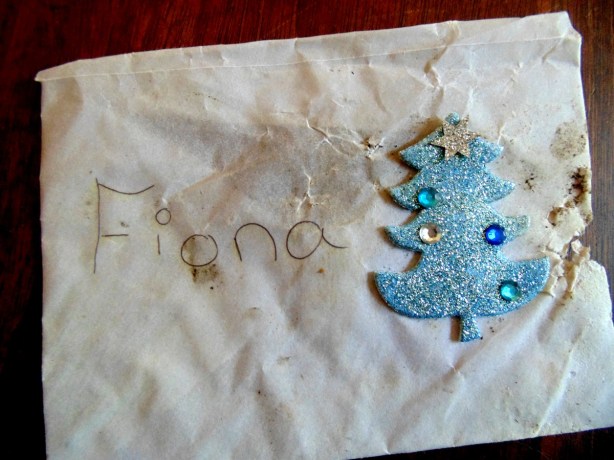
Mel picks up the envelope from the floor. It’s been stepped on a bit. The “O” in Fiona is dirty.

“Who’s this for?”

“Who do you think,” Fiona says. “It says “Fiona. Can’t you read?”

Mel can’t read. Fiona knows that. He’s only four. He’ll read in grade one, that’s what his mother says, when she’s not lying on the couch watching her soaps. When she’s not drinking her G&T’s at four o’clock, and painting her nails flaming red.

“We have no food,” Fiona shouts. “We never have any food.”

“We’ll order pizza,” her mother says, her voice muffled by the sound of a saran wrap commercial. Freshness You Can See. Mel peeks back around the door towards his mother’s voice.

“Really?” he says. “Pizza?”

The party is tonight but there is no way Fiona can go. Her mother won’t be able to drive her. Fiona needs to look after Melvin. He can’t be left alone and most Friday nights her mother goes out late. Fiona walks over to the envelope and steps on it again. She sighs at the little sparkly tree, such a pretty colour blue. The glitter, the gems, the gold star. The whole thing just makes her sad. She sighs again. Steps again. Smooshes it around a bit. It rips on one side. And what is all the dirt on her shoes? Fiona notices her footprints through the kitchen and twists her foot up to look at the bottom. She stepped in something on the way home. Mud. Sigh. Sigh again.

Mel comes back into the kitchen. This time fully in. “We’re getting pizza,” he says. “Can you believe that?”

“Have you looked in the fridge? There’s nothing in the fridge.”

Fiona’s mother is standing there suddenly, sloshing her G&T around in her glass. The ice cubes tinkling. “Friday night,” she says. “Party.”

“Yeah, I guess,” Fiona says, trying not to look down at the floor, at the envelope, at her mother. Trying to look anywhere else.

“What’s this?” Her mother picks up the envelope.

Mel says, “Can’t you read, it says Fiona.”

“It’s tonight,” Fiona says, her face feels hot. “I can’t go, I know.”

“Why not?” Mel looks from his mother to his sister, back and forth. “Why can’t she go to a party if it says Fiona on the envelope?”

There is silence in the room, except for the hum of the fridge. Fiona’s mother jiggles her glass a bit. Bites her lip. “Where’s the party?” she says.

“Samantha’s house.”

“You’d need a ride.”

Fiona nods.

“It’s a pretty envelope.”

“Or it was,” Mel pipes in. “Until Fiona stepped all over it with her muddy shoes.”

Fiona tenses. Her mother looks down at the linoleum and sees the prints. She looks quickly back up at Fiona.

“I’ll clean it,” Fiona says. “Sorry.”

Fiona’s mother looks again at the dirty envelope, the hole on the side. She opens it up slowly, balancing her G&T in one hand, the envelope in the other. She pulls out the invitation. “Look,” she says. “It’s not dirty at all.”
Fiona looks. The invitation has glitter on it, more gold stars. It looks really pretty.

“I can take you,” her mother says, suddenly. “Mel and I will stay home tonight. I’ve got a headache anyway. We’ll stay home and eat pizza and watch TV.”

Mel squeals a bit. Claps his hands. “Pizza,” he says.

Fiona’s mouth won’t close. All the way to Samantha’s, her mother driving slowly along the rain-soaked streets, Fiona clutches the invitation in her hands and tries to close her mouth. But she can’t. It won’t close. A big “O” with her lips. An “O” like the dirty “O” in Fiona. The envelope long-forgotten in the kitchen garbage, tea stains on it from a wet bag. Mel sits beside her in the car, in his little seat, and he hums a bit. He’s waiting for his pizza and hoping his mother hasn’t forgotten. Every so often he looks over at Fiona and she looks at him and they both look down at the invitation in her hands and then look out the darkened window into the rainy streets. This is as close to happy as they’ve been in a while. One has pizza, the other her first party. Their mother leans forward over the steering wheel and she peers out into the glittery, shiny road, searching carefully for the way forward.

Michelle Berry is the author of three books of short stories, How to Get There from Here, Margaret Lives in the Basement, and I Still Don’t Even Know You (which won the 2011 Mary Scorer Award for Best Book Published by a Manitoba Publisher and was shortlisted for the ReLit Award, 2011), as well as five novels, What We All Want, Blur, Blind Crescent and This Book Will Not Save Your Life (which won the 2010 Colophon Award and was longlisted for the ReLit Award, 2011) and Interference. Her writing has been optioned for film and published in the U.K. with Weidenfeld & Nicolson. She is also co-editor with Natalee Caple of The Notebooks: Interviews and New Fiction from Contemporary Writerswhich is based on the famous Paris Review interviews — and has collaborated on an art book with Winnipeg artist, Andrew Valko, called, Postcard Fictions. Michelle taught creative writing at Ryerson University, was on the board of PEN Canada and the authors’ committee of the Writer’s Trust and served as Second Vice-Chair of The Writer’s Union. She presently teaches online for The University of Toronto, in-class at Trent University, and is a mentor at Humber College. She is a contributing reviewer for The Globe and Mail.

She can be found at: http://mber22.wix.com/mberry

♦♦♦

Up Next:
kemp“The ill litter it
 refuse refuse
and garb age.”

schmidt

the filling
cracked
________

a wildfire
fire line
hoof prints
spruce
smouldering
the crust
the crisp
hide of a doe
perhaps the mother
the burnt
fawn
spots
burning

Brenda Schmidt lives in Creighton, a mining town on the Canadian Shield in northern Saskatchewan, in the heart of what’s currently an extremely dry forest. The #skfire hashtag on Twitter is the source of the fire in this piece. She is the author of four books of poetry and a book of essays. Both her poetry and nonfiction have been shortlisted for Saskatchewan Book Awards. Her work is included in The Best Canadian Poetry in English 2015.

She can be found at www.birdschmidtblogspot.ca


♦♦♦

Up Next:

berry

“Why can’t she go to a party if it says Fiona on the envelope?”

hamilton
We dammed their streams and built overtop them then decided we wanted them back. We decided we wanted to rehabilitate what we called “our urban streams.”

It was not possible to count the returning chum in Still Creek behind Canadian Tire because we were 30 feet away, the closest we could get behind the Vancouver Film Studios white safety gates, and they were swimming under water and glare from the overcast sky. In what we with binoculars noted to be a pebble bed, we saw brown tails swishing as the females pitched stones away to form redds; occasionally we saw splashes. It was nothing to watch, except for its significance in a time of natural disasters and pestilence. The side of the stream was just scrub, plastic bags caught on half-dead shrubs, a dead salmon eddying on its side.

A fish swam back from the gravel bed towards us. It was grey and covered in white lesions that looked fungal. These might have been battering wounds; salmon produced a stress hormone to marshal enough energy to make the swim, from open ocean to east Vancouver, to Burnaby, salmon on steroids, leaping uphill, but when they finished spawning, it was that same hormone flooding their cells that killed them.

We were almost at the end of the city, where, in 2006, fry had been released. People then—community do-gooders—wondered if this urban stream, which ducked under roads and buildings, could actually carry the fry out to sea. And here they were, now, finally, life cycles finishing, the worse for wear. People beside me, balding men in caps and women with jaunty ponytails, and kids holding the bars, wondered where had they been?

I consulted diagrams charting chum and sockeye migration routes and reported back that these salmon had probably circled through half the Pacific. How irradiated were they? Were the cankers on their sides possibly radiation burns?

As local scientists had noted, the fish don’t swim anywhere near Japan, although currents travel 10K a day, and so, by rough estimate, it would take 1.25 years from the March, 2011, Daiichi nuclear meltdown for these chum to have swum to irradiated water. It would take 1.25 years from meltdown for those irradiated currents to reach Vancouver.

It was, now, as we stood looking at Still Creek by the white bars of Vancouver Film Studios, 2.5 years from meltdown. People wanted to know: should we be eating Pacific salmon?

We did a little straw poll. Who still ate salmon? Most hands went up. A kid said, “Yuck,” which was how I had felt, too, at his age. But then someone wanted to know whether, aside from radiation concerns, spawning salmon were edible. I said I thought they deteriorated when they left the salt. I said I believed they began to taste like mud.

The child said obviously bears disagreed. And then he pretended he was a bear, moving his hands up into claws. He said, “Grr!”

Jane Eaton Hamilton is the author of eight books of short fiction and poetry. Her memoir Mondays are Yellow, Sundays are Grey, retitled No More Hurt, was a Sunday Times bestseller and included on the Guardian’s Best Books of the Year list. She is the two-time winner of Canada’s prestigious CBC Literary Award for fiction (2003/2014). Her work is included in The Journey Prize Anthology, Best Canadian Short Stories and appears in publications such as Salon, NY Times, Seventeen Magazine, MS blog, Full Grown People, Macleans, Numero Cinq and many others. Her poetry volume Love Will Burst Into a Thousand Shapes came out in fall 2014 and a novel, Weekend, will be released in spring 2016. She is also a photographer and visual artist. She lives in Vancouver.

She can be found at www.janeeatonhamilton.wordpress.com


mayoff

Plugged in to a morning power
walk, the eternal question
buzzes through ear buds:

“Where were you
while we were getting high?”

Caffeine and endorphins
and the usual road-
side distractions: packet of

Zig-Zags, Trojans wrapper,
Mickey D container.

A landscape co-opted by
product placement.
No man

is an island, but every
myth is an oasis

delivering a real-life
litter of karmic detritus to be worked
off. Short

sharp steps zig around
problematic past lives and zag

behind futuristic cloud formations
where the road’s final grade,
while merciful

on the knees, signals
a variation on the playlist’s

soundtrack to ask, How
low can we go?

Steven Mayoff was born and raised in Montreal, lived in Toronto for 17 years, then moved to the bucolic splendour of western Prince Edward Island in 2001, where he writes full-time. His fiction and poetry have appeared in literary journals across Canada, the U. S. and in Ireland, Algeria and France. His story collection Fatted Calf Blues won a PEI Book Award in 2010, was short listed for a ReLit Award and was a Top 5 Finalist for the CBC Cross-Country Bookshelf (Maritime Division) in 2011. Our Lady Of Steerage, his first novel, was released in June 2015 and he is currently working on his first poetry collection Red Planet Postcards.

He can be found at www.stevenmayoff.ca


DSC03026

1.  Begin as pie.

2.  Prepare to leave warm fragrant vibes of bakery.

3.  When the moment of departure arrives, don some sort of covering. (Cardboard is a good all-weather choice.)

4.  Travel carefully to a granite countertop in a house with a view and a black Lab named Cecil or Wyatt or Esmerelda.

5.  Be glad you’re not a pork chop.

6.  Sit in cardboard covering on granite countertop, grateful for every minute you are ignored by black Lab (who prays every day that pork chops not pie will arrive on counter) while someone named Charlotte makes dinner, lights candles, pours wine, then drinks most of bottle alone, blows out candles, tips dinner into garbage can while cursing Karl who apparently was supposed to be there at seven but who called at eight seventeen saying he could be there by nine, nine thirty, and was that a problem?

7.  Karl, apparently, is an idiot. He arrives at quarter to ten, at which point Charlotte grabs you (still in your cardboard all-season cover-up) and smashes you against Karl the Idiot’s chest then slams the door. Do not fight the smashing. You are pie, almost useless in this situation.

8. Cringe.  Cringe like mad as you are savoured by Karl (bits of you in his moustache is the worst part) while he stomps back to his car, clutching you to his chest until he’s had his fill then flinging your doughy fruitiness into the shrubbery and, because he can, tearing your cover-up to smithereens. After which he drives off, making that angry peeling tires sound as he goes. He really is an ass.

9.  Prepare for more horror (though not nearly as vile as Karl’s moustache) as CecilWyattEsmerelda presses wet nose on window, whining to be let outside.

10. And Charlotte acquiesces.

11. Soon almost every bit of you will be resting in dog belly, including the cardboard. All but one tiny square. The only proof you ever existed at all.

12. That and dog breath.

13. And, sadly, Karl’s moustache.

When not writing, Carin Makuz  can be found wandering the shores of Lake Ontario muttering about darlings that won’t take a hint. She is a workshop facilitator for abused women and youth at risk. Her work appears in journals and magazines across Canada, the U.K. and U.S., has been broadcast on CBC and BBC Radio and has won the Commonwealth Short Story Prize (Canada and the Caribbean) but, more importantly… she has read on the Eden Mills Fringe stage in the rain. She combines text with photography, reviews books and chats with writers on her blog www.matildamagtree.com