mayer

Grocery shopping as a child with my mom was usually a let-down.

To a kid looking for her next junk food hit, trips to the supermarket were filled with stonewalled requests to get my mom to stray from her shopping list; to buy me something sweet, something salty — something bad. But she held fast in her German stubbornness that I’d be better off with an apple.

She wouldn’t budge to the beckoning of the cartoonish pink monster on the boxes of Frankenberry cereal. I so desperately wanted to befriend that guy over a bowl and some milk. In a rare weak moment, she occasionally wavered for big-billed Toucan Sam, but I can count those times.

If anything got a pass, it was potato chips, her personal weakness. Salt and vinegar and barbecue secured prime real estate in the snack cupboard until mindlessly munched while watching Miami Vice or The Love Boat. I grew up knowing the Hostess Munchies far better than I would ever know Count Chocula. I also never had the pleasure of winning a battle begging for Kool-Aid. My mom remained unsmiling when faced with Kool-Aid Man’s grin, but she always made room in the shopping cart for the pulpiest, tartest orange juice concentrate she could find.

“It’s real juice,” she told me. “There’s nothing good in Kool-Aid.”

I refused to believe her. Instead I’d get my fix of the Kool-Aid Man’s technicolor offerings at friends’ homes when I’d go over to play with toys I wasn’t allowed to have either… like Barbie (she was the wrong image to be thrusting on young girls) or G.I. Joe (he was too violent).

My best friend, the boy who lived down the street, always had “freshie” in the fridge, Star Wars action figures at the ready and the Beastie Boys ‘Licensed to Ill’ in heavy rotation. His was the coolest house on earth in my world. All I could offer in return was Play-Doh and that pulpy orange juice, so we usually wound up at his place.

As we got older, those play dates became less frequent and more awkward, eventually reduced to going over and checking on his cat when his family went on vacation. I didn’t drink the Kool-Aid that may have been left in his fridge but only because it would have seemed too obvious that I strayed from my task of indiscriminately dumping Friskies into the cat’s bowl.

By the time I got my driver’s licence my mom was happy to send me to the grocery store with her shopping lists. (As it turns out, she’d never enjoyed those trips much either.) Oh, the thrill to be set free in the aisles where my old sugary friends-in-waiting lived! No one to scrutinize my choices. So down the aisle I went, giddy with excitement to visit Kool-Aid Man—and when I was scolded for bringing him home, I already knew what my answer would be. “Sorry, Mom, you just said juice. You didn’t say what kind.”

His perch on the shelf was right at eye level and I wanted to hug him. But after getting through all the formalities of the proper introduction that eluded us so many times before, I studied him carefully. What was so bad about this guy anyway, with his girth and kindly features…?

I turned him over and read the fine print on his back. That’s when I saw it, the part about adding one cup of sugar—one cup of sugar!—when whipping up a pitcher.

My nose wrinkled.

“Oh my god,” I said to Kool-Aid Man as if I’d just discovered the Beastie Boys were lip sync-ers.

I put him back on the shelf and headed for the orange juice.


Tiffany Mayer  is a journalist and the author of Niagara Food: A Flavourful History of the Peninsula’s Bounty (History Press, 2014). Her mom’s grocery shopping tips stay with her to this day. (As does a love of the Beastie Boys thirty years after first hearing Brass Monkey over an illicit glass of grape Kool-Aid in her best friend’s bedroom.)

She can be found at eatingniagara.com

♦♦♦


Up Next:

francis“I’ll pick him up some panty liners. See how funny he thinks that is.”

westhead

My husband is the type of man who consistently abandons loaves of bread on top of the refrigerator, which, as any sane, thinking individual should know, increases the internal temperature of said bread, thereby rendering it much more hospitable to floating mold spores, which thereby render it disgusting.

Furthermore, my husband is also the type of man who will consume all of his wife-and-helpmate’s chips and will then add further unchivalrous insult to grave injury by neglecting to replace those chips, leaving the helpmate desperate and alone with her tormented innards twisting in response to her terrible, unquenched salt cravings.


Jessica Westhead’s  fiction has been shortlisted for the CBC Literary Awards, selected for the Journey Prize anthology, and nominated for a National Magazine Award. She is the author of the novel Pulpy & Midge (Coach House Books, 2007) and the critically acclaimed short story collection And Also Sharks (Cormorant Books, 2011), which was a Globe and Mail Top 100 Book and a finalist for the Danuta Gleed Short Fiction Prize.

She can be found at www.jessicawesthead.com


♦♦♦

Up Next:

mayer“My mom remained unsmiling when faced with Kool-Aid Man’s grin,”

carpenter

Her problem with cleaning up clutter was always not knowing how to start.  Should she clean up the junk-laden backyard first?  Clean up the living room? The kitchen?  Maybe the kitchen.  It was always full of stacked and dirty dishes, and whenever she wanted to fix a meal she would wash whatever she needed and re-stack them dirty in the sink or wherever.  For many years she’d had a job as a sales clerk in the basement of the Army & Navy, and what the hell, a girl got tired after a day’s work.  She’d earned the right to put up her feet and have a beer.

Each pile of rubble, each abandoned project, was a monument to failed love.  Whatever smells lingered from the mildewed recesses of the heaps, they were intertwined with the memories of this or that lowlife, this or that con artist husband, this or that reclamation project gone wrong.  Peg’s record player, later her stereo, later her boombox,, moaned, as did the house itself, with the laments of lost love.

Some of her men left gifts behind, a collection of china unicorns, a shelf full of dolls, a large array of fancy candles that never saw a match, dozens of midway prizes in plastic bags in the living room, the basement, the corners of rooms.  The stacks of junk grew so high that Peg and her bewildered boy Jerry had to navigate around them on pathways shovelled out between heaps of discarded things.

Everywhere throughout the house lingered the sad stench of cigarettes, uncertain plumbing, discarded food, cabbage and boiled coffee, soured milk, damp newspapers and rotting wood.  As fast as Peg abandoned the gifts left behind by the brief husbands and boyfriends, young Jerry abandoned the toys they had brought for him.  A set of drums found a special place for several weeks in the living room amid islands of junk and when Jerry lost interest in them, waves of abandoned refuse gathered around them, forming a new atoll.


David Carpenter  has worked as a translator and critic and is the former Fiction Editor of GRAIN Magazine. He is the author of several novels, a collection of poetry, and the award-winning Welcome to Canada (Porcupine’s Quill, 2010). Other  non-fiction books include Courting Saskatchewan and A Hunter’s Confession… and a collaboration with an old Cree trapper and hunter: The Education of Augie Merasty (University of Regina Press, 2015), one of the few books that recounts first hand experience of a residential school. Carpenter recently won the Kloppenburg Award for Literary Excellence. He lives in Saskatoon.

♦♦♦


Up Next:

westhead“much more hospitable to floating mold spores,”

gone

Posted: March 17, 2016 in amy jones
Tags: , , , ,

jones

You thought it would be a good idea to have extras. Napkins, straws, little salt packets strewn all over the car between St. Louis and Oklahoma City. We ate French fries out of cardboard containers stuffed into cupholders, fast-food burgers dripping mayonnaise and pickle juice onto bare tanned legs, ice melting into our fountain pop.

“In America we don’t call it ‘pop,’” you said. I didn’t ask you any questions, I had learned things were better that way. Later I fell asleep and when I woke up we were parked somewhere outside Amarillo, you sitting on the hood of the car smoking a cigarette, staring out into the shimmering Texas twilight.

Six years, four cities, thousands of kilometres. A dozen other lovers and “In America, we don’t call them kilometres,” I can still hear you say. I reach beneath the drivers’ seat feeling for a lost quarter and at first I think my hand has been cut, bloody red gore smeared across my palm, between my fingers, under my nails. A ketchup packet, an artefact excavated from the dry, dusty plains of my past. I touch it and I remember, like an electric shock. The smell of your shaving cream. Your hand on my leg. What seemed like an endless road.

I roll down the window. And I let it go.


Amy Jones  is the author of the short fiction collection What Boys Like and Other Stories (Biblioasis) and the forthcoming novel We’re All In This Together (McClelland & Stewart, June 2016). You can find her on Twitter @amylaurajones.

♦♦♦


Up Next:

carpenter“Some of her men left gifts behind, a collection of china unicorns, a shelf full of dolls…”


vermeersch

The evidence suggests the one

who would not be the martyred slave of Time

was here.


Paul Vermeersch  is a poet, editor, and teacher. He is the author of five collections of poetry including The Reinvention of the Human Hand and Don’t Let It End Like This Tell Them I Said Something. He lives in Toronto, and is the senior editor of Wolsak and Wynn Publishers.


♦♦♦

Up Next:

jones“somewhere outside Amarillo, you sitting on the hood of the car”

luke

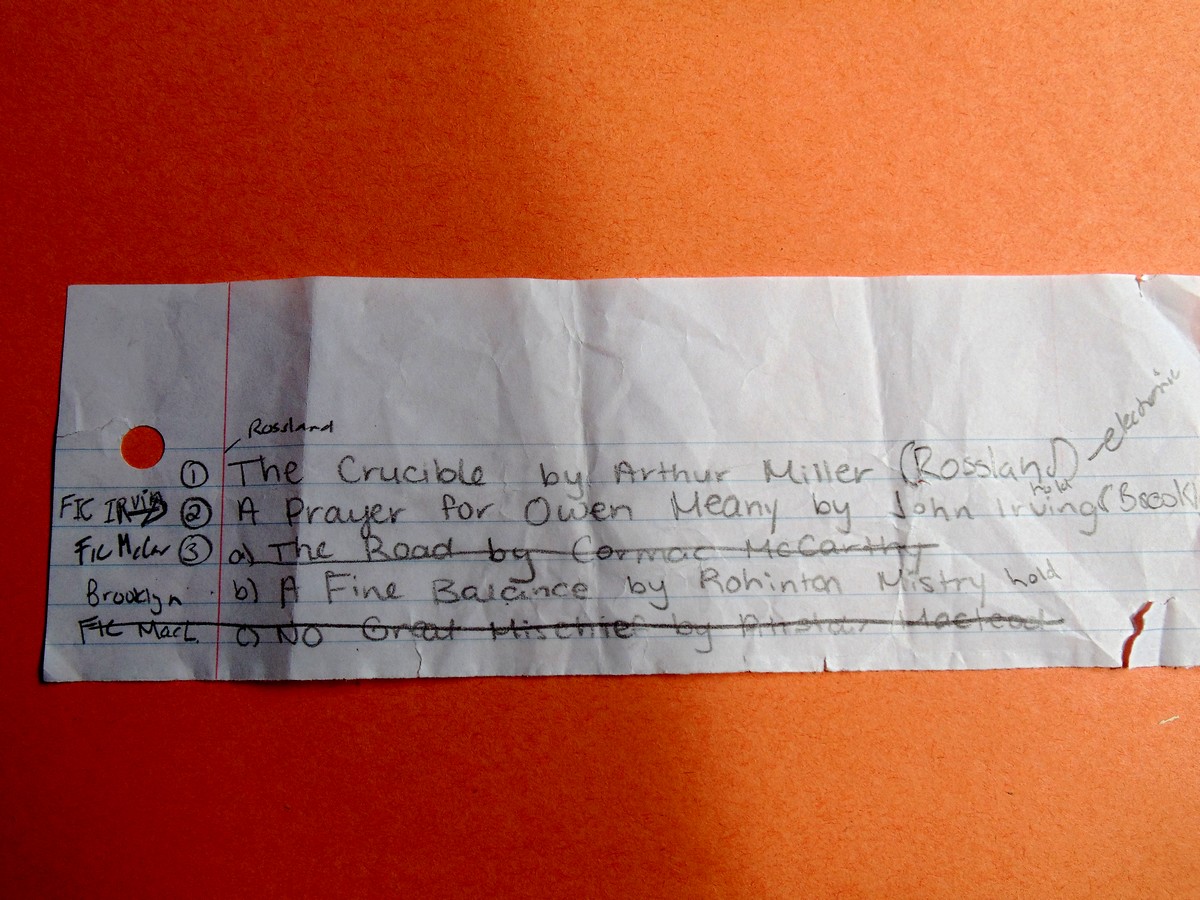
My heart. Its two halves hang in a fine balance.

Twenty years ago, my old lover gave me a ceramic heart on a ribbon. Last year when he left, I snapped it down the middle and strung the two halves side by side in the window.

This new lover twines his fingers through mine in public and cups my cheeks when we kiss. His texts contain stickers of lips and hugs and YouTube links to Ain’t No Sunshine and Long Lost Lover.  He teaches me self-defence moves and introduces me to vodka caramel. Somehow, he makes me look good when we dance.

Still, I have wrinkles at my knees and on the undersides of my arms. He is mostly bone-smooth and muscled, except for his face and torso, which he shaves twice a week. After a day, he’s too thorny to touch. And yesterday he asked, Wasn’t Owen Meany a cartoon bully?

So today, in high heels, I avoid a gaping hole in the sidewalk, and dodge drips from overhead drains and skirt several buckled blocks on the road to meet him around the corner, at Marco’s Pizzeria, where I order pepperoni because it’s his favourite not mine and offer him half to eat with his beer. Then I say something about this having been fun, about my heart, and inanely, perhaps even about balance and a crucible.


Pearl Luke is the author of two novels, Burning Ground and Madame Zee. She does freelance editing and mentors emerging writers. She can be found at http://www.pearlluke.com


♦♦♦

Up Next:

vermeersch“The evidence suggests…”


baker

This is administrative,
a post-it note pulled
off a Trapper Keeper
or maybe an office door;
the office of an artist
who teaches art for a living
who lives hand-to-mouth
post-it-note-to-door.

There’s a code we use:
symbols scratched into
fenceposts, painted in laneways,
drawn with sharpie on post-it notes
it’s how we let the others know
where the patrons are,
where the skinflints are, at night

we sing it in boxcars, by day
we teach it to the lackadaisical
and the eager alike. The code
defies convention and embraces
conformity, the code busts
stereotypes and sneers at
Millennial angst

it is unflinching
it is timeless, it is electrifying
this artist code—this 4B7.
four bee seven. But.
What does it mean?
If you’re really one of us,
you already know


Carleigh Baker  is a Métis media maven. Her work has appeared in subTerrain, Prism International, and Joyland. A contributing artist at thepeel.ca, Baker’s poetry chapbook, The Closest We’ll Get To Neon, chronicles her experiences paddling the Peel River Watershed. Bad Endings, her short story collection, is forthcoming with Anvil Press in 2017.

♦♦♦


Up Next:

luke“…Wasn’t Owen Meany a cartoon bully?”

sylvester

What’s buried under the ice?

Spring grass

Summer heat

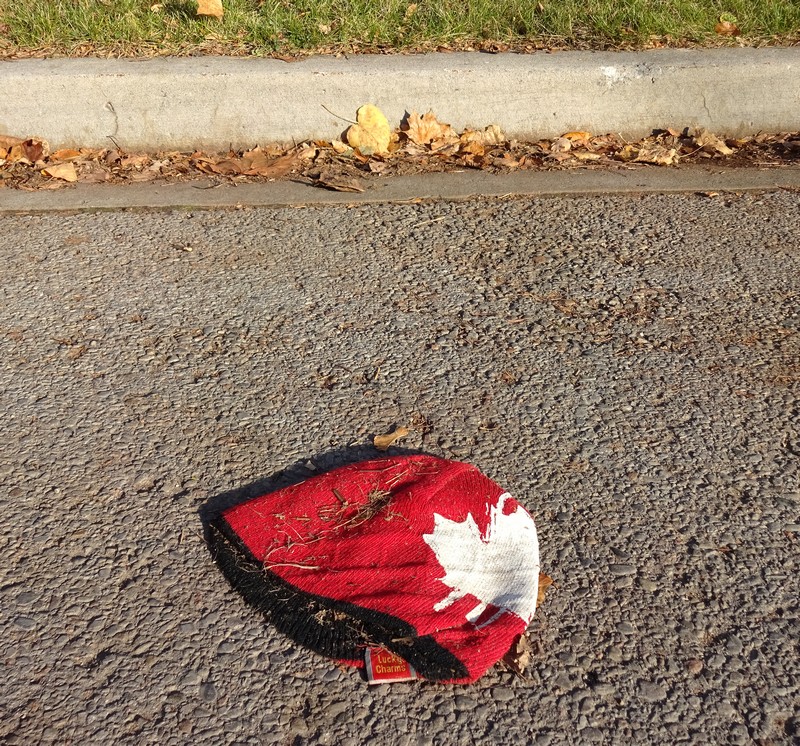
A lucky charm

sylvester-kevdigital drawing by Kevin Sylvester


Kevin Sylvester  is an award-winning writer, illustrator and broadcaster based in Toronto. His books include the Neil Flambé series, Splinters, Game Day, Gold Medal for Weird, Sports Hall of Weird and MiNRs1, a space adventure. MiNRs2 will be released in September 2016. He can be found at http://kevinsylvesterbooks.com/


♦♦♦

Up Next:

baker“we sing it in boxcars, by day/ we teach it to the lackadaisical”


tuinman

Eunice Macfarland opens a carefully folded note and pins it against the kitchen window using a pair of salt and pepper shakers. With the resolve of a decoder, she scrutinizes the handwriting. 782 BERMUDA. Recognition floats along the shores of her memory, but she’s unable to reach the depth where the meaning of the characters resides.

“Raymond,” Eunice calls out in a paper-thin voice. She waits, then calls his name again. A cat drifts into the kitchen, meowing insistently.

Eunice shuffles to the refrigerator and returns to the counter with a left over plate of flaked tuna. When she pushes aside the jumble of soiled dishes littering the Arborite surface, a china cup and saucer slide from their place atop an angled cereal bowl and smash into shards. The jarring sound causes Eunice’s eyes to well up. She fishes a wad of tissue from the wrist of her sweater and dabs under the rim of her glasses. The cup and saucer were a wedding gift from Raymond’s cousin and his wife, Mary. They live in a little town, the name of which Eunice can’t recall.

782 BERMUDA. Why has she been carrying this note in her apron pocket? Her mind stutters like the peevish tractor engine Raymond is forever fiddling with. Whrrr. Whrrr. Whrrr. Three cats wind around her ankles now. They look up at her like old souls that know the answer to her question. Eunice’s lips press into a white line.

The telephone rings in the front parlour.

“Raymond,” she calls as she carries the plate of tuna across the kitchen. “I’m going out now.” The ringing stops and the quiet of the house fills her with unease. “He must be tinkering again,” Eunice explains to the cats apologetically. “Raymond wouldn’t hear a bomb go off if he’s fixing something or working on a puzzle.”

The cats trail after Eunice when she pushes the screen door open. She sets the plate on the porch, then wipes both hands on her apron while the cats devour the tuna. Now that they’ve lost interest in her, she’s free to visit the chickens.

Eunice’s breath punctuates the autumn air in short frothy bursts as she labours across the uneven ground to the barn. 782 BERMUDA. Something about the note rankles her. The tall block letters, so unlike her delicate script. The barely discernible E. Perhaps it’s Raymond’s handwriting. She’ll ask him about it later.

From the doorway of the barn, Eunice sees the lid sitting askew on the chickens’ feed bin. She shakes her head at the scattering of grain and mouse droppings on the ground. It’s the kind of oversight she’d expect from Raymond, yet Eunice is certain it was she who last fed the chickens.

The coffee tin is missing too, the one she uses to carry the chicken feed to the coop. It’s probably on a shelf somewhere holding another of Raymond’s disassembled gadgets. Eunice gathers the hem of her apron with one hand, and with the other, she scoops the feed.

When Eunice opens the door of the run, chickens spill franticly into the barnyard. She disburses grain in elegant arcs. Hens race back and forth, clucking and pecking. They remind Eunice of children scrambling for candy tossed along a parade route. She loves parades. When she was a little girl, Eunice’s mother and father brought her to see an elephant walk down Main Street, followed by a candy-throwing clown dressed in a top hat and a bright red suit. They bought ice cream later. Rum raisin, two scoops, on a waffle cone.

Eunice gathers the last handful of chicken feed from her apron and offers it to a pair of stragglers. They peck at her palm until it’s empty. She thinks of Raymond pecking away as a Morse code operator during World War Two. He enlisted in the Canadian military with his cousin from that little town she can’t name. There’s a photo of herself and Mary with the boys when they were on leave. Eunice is wearing Raymond’s hat tipped rakishly over one eye.

Raymond. He lavishes in the challenge of bending numbers and letters to his purpose. 782 BERMUDA. A thought ignites in the centre of Eunice’s brain like the picture tube in an old television set. The spark grows until it bursts into a fully formed idea.

Eunice hobbles across the yard, up the porch steps, through the screen door, across the kitchen and into the parlour where the rotary telephone waits on a heap of newspapers. She pulls a pen from a bowl of plastic fruit on the coffee table and writes 782 BERMUDA across the top of a classifieds page. Her finger traces the rotary dial and stops at ABC. She records the corresponding number 2. Her heart races as she continues to DEF and number 3. There are only letters R through A to code. A minute later, she giggles at the numbers recorded across the top of the newsprint: 782 2376832.

Eunice takes a deep breath and dials the numbers in succession. A dull warble. Silence. Another dull warble and then, “Hello.”

The voice is familiar.

“Hello?” the man says again. “Is anyone there?”

“It’s Eunice,” she manages to squeak out.

“Oh, for Jesus’ sake, Eunice! Just a minute.” His hand must be covering the mouthpiece. “Mary,” he calls in a muffled voice, “come quick.”

“Who is this?” Eunice asks.

“It’s Will.” He waits then adds, “Will and Mary. Raymond’s cousins from Truro.”

“Oh yes.”

“We were so sorry to hear the news about poor Raymond. It’s so hard when they go — you know, all sudden like that.”

“All sudden …” Eunice repeats.

“Mary and I have been trying to call you since we heard at the end of June. How are you managing?”

Eunice lays the receiver in her lap. She feels like she’s underwater. A disconnected voice implores her from far away.

“Eunice, are you there?”


Gwen Tuinman’s  short fiction is included in The Renaissance Anthology  and is currently featured in a text and photography exhibit at The Robert McLaughlin Gallery. She is a former member of the Board of Directors for the Writers’ Community of Durham Region and writes for The Word Weaver. She is currently at work on a novel. Research and reflections relative to her works in progress can be found at http://www.gwentuinman.com./


♦♦♦

Up Next:

sylvester“What’s buried under the ice?”

cullen

When age collides with vanity
mammograms and blood tests;

when we are neither sunset, nor flower
nor brilliant season;

when our mothers are all departed
and when still, we are descended from Eve;

who will call us Darling?
Who will name us Sweetheart?


Nancy Jo Cullen’s  stories have appeared in The Puritan, Prairie Fire, Grain, Plenitude, filling Station, The New Quarterly, This Magazine and The Journey Prize 24 and 26. She has published three collections of poetry with Frontenac House Press.  Her most recent book, the short story collection Canary, is the winner of 2012 Metcalf-Rooke Award. Nancy Jo is the 2010 winner of the Writers’ Trust Dayne Ogilvie Prize for Emerging LGBT Writer.

♦♦♦

Up Next:

tuinman“Raymond,” she calls as she carries the plate of tuna across the kitchen. “I’m going out now.”