lav-harris

Early in the morning, in the hour before dawn, the haunting, ethereal squeal of subway trains leaving the Greenwood yard wakes me, and I dress in play-clothes and go quietly down the stairs to the kitchen. There I take twenty-five cents from a pile of change on my parents’ kitchen table and slip out the front door and down the steps to the sidewalk.

Across the street at Mrs. Nosy’s house, no curtains twitch in the gloom, meaning that for another morning I am safe from the neighbourhood voyeur. I am safe, too, from the bantering jocularity of the teenaged Stamatopoulos brothers who live next door and spend their afternoons leaning against cars whose radios play a ceaseless round of “Stairway to Heaven” and “Xanadu.”

The street is still, but the silence is deceptive. Amid the gloom is an entire block’s worth of cats, preening on the sidewalk or posing on porches, and I greet them all as I walk past the darkened houses. Garbage bags spill across the sidewalk, and I greet them, too. Almost always I find something interesting to bring home: on one occasion a huge pile of interior decorating paint and wallpaper samples; on another morning a rusted but working toy forklift; on yet another occasion a giant grey stuffed elephant my parents make me leave on the back verandah.

Down at the corner, where Highfield Road meets Gerrard Street, the morning is already busy with foot-traffic and streetcars. Arriving at the corner is like entering a clearing filled with light. And here by the streetcar stop is a battered, rusted, red Toronto Sun newspaper box with a cascade of bright yellow suns on its side, advertising “the little paper that grew.” I put my sweaty quarter in the slot, hear it drop down into the hopper, crank open the wire-fronted window and pull out a copy of the Sun. I turn and walk back up Highfield, the metallic smell of traffic and the tang of fresh newsprint in my nose.

At this age (I am seven or eight) I do not know that the Toronto Sun is denigrated as a tabloid. I know it mainly for its accessible-to-me news reporting, and for the scantily-clad Sunshine Girl who fills most of the page inside the front cover. I tell my mother I would like to be one, someday, and she never dissuades me, never calls them “trash,” never criticizes the Sunshine Girls for allowing themselves to be objectified and ogled. It is 1979 or 1980, and these words, these concepts, have not yet entered the popular lexicon.

I read the Sun voraciously. I read outraged letters to the editor, which are usually followed by a three or four word take-down from the editors. I read the advice columns, the comics pages, and the horoscope. I read about Terry Fox, whose fund-raising run across Canada is covered almost as breathlessly as his decline and death from cancer. I read about fatal house fires, gangland murders and an abducted girl whose body is discovered in a garbage can.

I read about everything in the city we never learn about at school, but which surrounds us, begging explanation. By reading the Sun I am able to understand things our parents refuse to discuss in our presence, like the forbidden allure of the Zanzibar Tavern on Yonge Street, or the screeching of tires on Walpole Avenue, and an ensuing silence punctuated by the wrenching shrill of a mother screaming her son’s name. I learn about things I have sensed while tiptoeing down my street at dawn: that a city is composed of undercurrents, of hidden things needing to be noticed and given voice.


Amy Lavender Harris  is the author of Imagining Toronto (Mansfield Press), which was shortlisted for the Gabrielle Roy Prize in Canadian literary criticism, and won the Heritage Toronto Award of Merit. Her next book, Wild City, explores intersections of culture and nature in the contemporary city. www.amylavenderharris.com


♦♦♦

Up Next:

coyote“She would make that noise with her tongue and tuck the rest of the pack into her purse.”

pottie

You are doubly offensive, first
for parking your damn Subaru
without a permit in a zone
for persons with disabilities,
too lazy to walk, too self-absorbed,
distracted by #fuckedup, forgot
what that painted blue wheelchair
stands for. Second violation,
ripping up the ticket, throwing it
on the ground, blatantly
littering. Yes,

that was me, badge #3082 Ontario Power,
authority to tell your line manager and to make you
pay for general vehicle infractions, waste,
and stupidity.


Lee Ellen Pottie  is a writer, photographer, painter, teacher/mentor, student, marketing coordinator, and editor for all word-related projects. She is working on a poetry manuscript about Vincent Van Gogh, his letters, paintings, and life. She and her partner, Richard Lemm, live in “Annie’s House” where they write, garden, walk their collie, Théo, and babysit the grandchildren.


♦♦♦


Up Next:

lav-harris“…no curtains twitch in the gloom, meaning that for another morning I am safe from the neighbourhood voyeur.”

mclennan

Cut to her Saturday afternoon sequence of duMaurier extra lights amid the half-capacity shopping mall parking lot. As usual, Alberta arrives half an hour early, aware that her pre-teen will be fifteen minutes tardy, reveling in her new wealth of shopping detritus and gossip. Until her daughter appears, this is the single stretch of time that Alberta allows herself to breathe; the only moment she isn’t mid-task, or rushing between points or appointments. The only time, too, she allows herself to stoop to such youthful folly: a pack of cigarettes secreted beneath the driver’s seat, set alongside an increasing guilt. Weekly, for nearly an hour, she sits silent on the hood of their Ford Taurus and waits. She inhales. She follows the paths of parking lot seagulls, each one paintbrush smooth, the lacunae of blue summer backdrops. On this particular afternoon she ponders rock climbing, hospital waiting rooms and swimming pools. She ponders her lost prairie, and the anonymity of suburban parking lots. She thinks back to the summer she witnessed a neighbour succumb to throat cancer, and now, as her husband emerges from chemotherapy, stoic and withered and weather-worn. She exhales, attempting to expel all of her fears and concerns along with the four thousand chemicals that make up cigarette smoke: nicotine, tar and carbon monoxide. In the soft August heat, Alberta treats asphalt as midden, newly littered with spent filters. Material remains. If everything were to end now, she wonders, if she were to disappear, might they ever find me. The small assemblage of abandoned butts the only evidence she’d been there at all.


Born in Ottawa, Canada’s glorious capital city, rob mclennan currently lives in Ottawa. The author of nearly thirty trade books of poetry, fiction and non-fiction, he won the John Newlove Poetry Award in 2010, the Council for the Arts in Ottawa Mid-Career Award in 2014, and was longlisted for the CBC Poetry Prize in 2012. In March 2016, he was inducted into the VERSe Ottawa Hall of Honour. His most recent titles include notes and dispatches: essays (Insomniac press, 2014), The Uncertainty Principle: stories, (Chaudiere Books, 2014) and the poetry collection If suppose we are a fragment (BuschekBooks, 2014). An editor and publisher, he runs above/ground press, Chaudiere Books, The Garneau Review (ottawater.com/garneaureview), seventeen seconds: a journal of poetry and poetics (ottawater.com/seventeenseconds), Touch the Donkey (touchthedonkey.blogspot.com) and the Ottawa poetry pdf annual ottawater (ottawater.com). In fall 2015, he was named “Interviews Editor” at Queen Mob’s Teahouse, and he is a regular columnist for Open Book: Ontario and the Drunken Boat  blog. He spent the 2007-8 academic year in Edmonton as writer-in-residence at the University of Alberta, and regularly posts reviews, essays, interviews and other notices at robmclennan.blogspot.com

♦♦♦


Up Next:

pottie“You are doubly offensive”


griebel

Everywhere you look

there is beauty.

The scruppled concrete

of a grey highway.

The wild purslane

with its bitter taste

of lemon and tenacity.

And here, a small gift:

a blue knot of string

shaped like a heart.


Rosemary Griebel  is a poet and the author of Yes (Frontenac). She is the Design Lead for Reader’s Services at Calgary Public Library, a position which allows her to focus on building a vibrant city of readers.

♦♦♦


Up Next:

mclennan“On this particular afternoon she ponders rock climbing,”

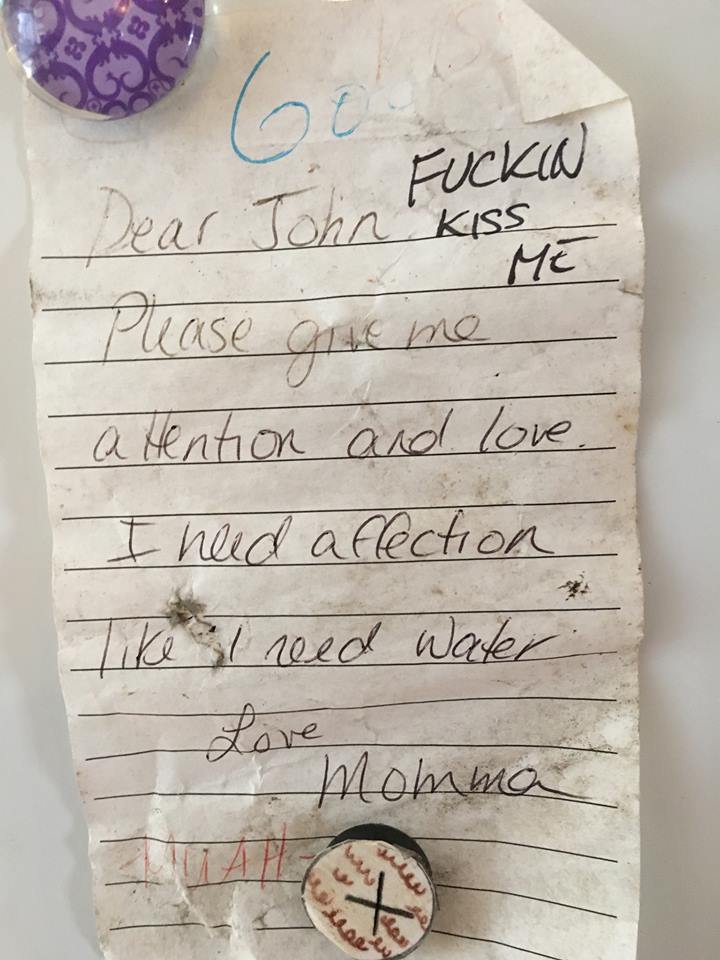
tsiang - hers

Our baby drinks and drinks from me.
I weep because she doesn’t know yet
that I’m an empty cup.

When I walk by the river the water
sinks to its knees, the air laps up the last of it and
Fish gasp in the riverbeds.

At home you pass me and I am dust,
falling lightly on everything around you.
You don’t even notice

that you kick a tumbleweed
as you head to bed. Our mattress is made
of the bones of the drowned, they crack,

empty of marrow, as you turn away from
me. Water, water everywhere

and not a goddamn drop to drink.


Sarah Yi Mei Tsiang  is the author of 8 books, including picture books, poetry, and fiction. Her award winning work has been internationally sold and translated. She is currently a professor of creative writing at Sheridan College.


**(“fuckin’ kiss me” photo, by Sarah Tsiang)


♦♦♦

Up Next:

griebel“wild purslane with its bitter taste of lemon and tenacity”


swan

“Forgotten, soiled but useable still. That is what I am to you if will take the time to see me.”


Journalist, feminist, novelist, activist, teacher, Susan Swan’s  impact on the Canadian literary and political scene has been far-reaching.  Her critically acclaimed fiction has been published in sixteen countries. Swan’s last novel, The Western Light, (2012) shares a narrator with her international bestseller, The Wives of Bath. (The Western Light was a finalist for the best fiction and non-fiction award by the Ontario Library Association. It is currently being made into a feature by Lauren Grant at Clique Pictures. Hannah Cheeseman is writing the screenplay.)


♦♦♦

Up Next:

tsiang - hers“When I walk by the river the water the sinks to its knees”


o'connor

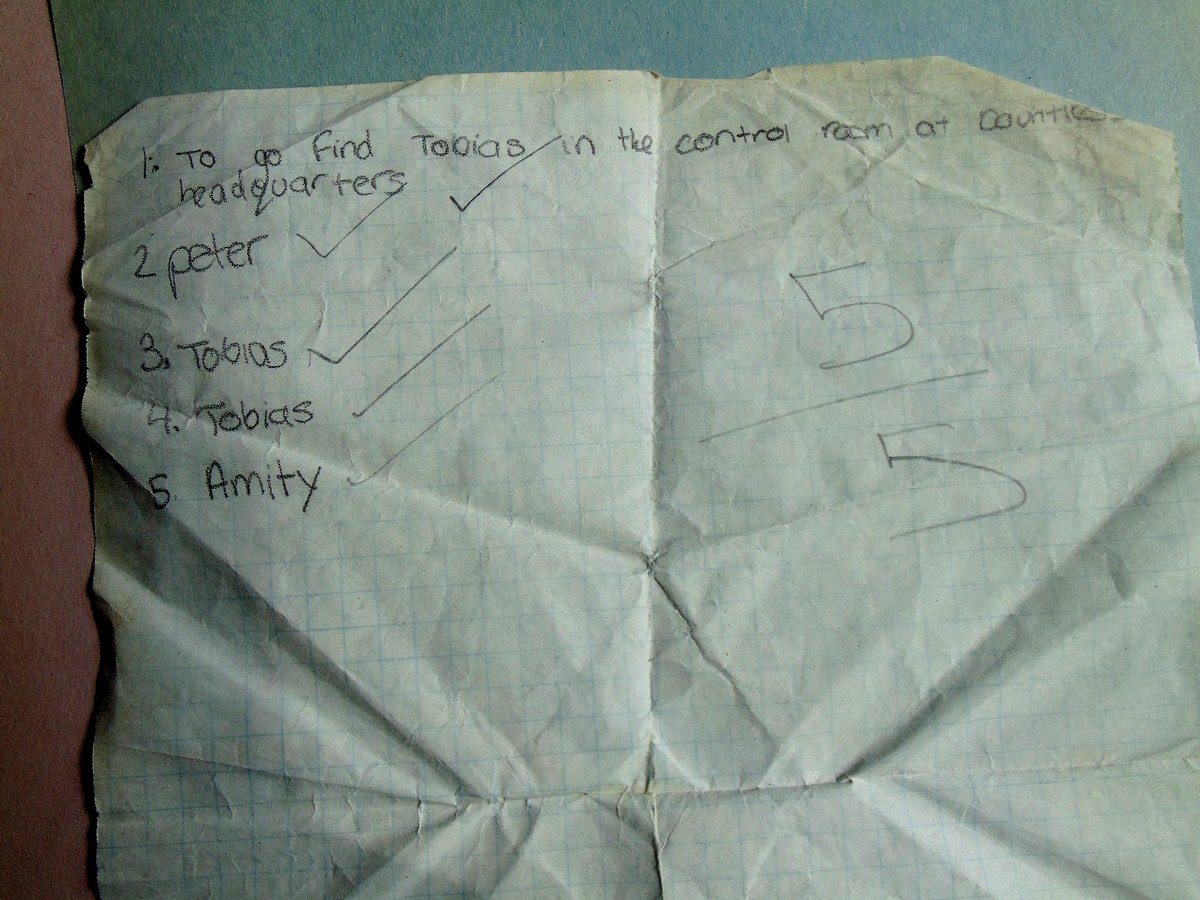
The lights blink out, one by one,
A synapse here, a word, a name,
Tobias.
Us.

Breakers blow, her screen goes blank.
Keys, long-lost, long-loved,
cascade
from fingers unresisting.
Jingling on a ring
around a rosey-toesie child.

Sparks alight.
Electric moth holes eat the sky,
Disconnect the dot-to-dot
of thought.
Corrupt the code.
Conduct, unbecoming.

We all fall down.
Control room out.

Heather M. O’Connor  would be lost without words. She writes nonfiction about greening our planet and fiction for challenged readers, as well as a mixed bag of other topics and genres. Betting Game, her teen soccer novel, was published last year by Orca. You can find her on Facebook, at heathermoconnor.com or at merlinwrites.com.


♦♦♦

Up Next:

swan“This is what I am…”

woodrow

The last meal we ever ate together was ice cream. I remember because she had been chewing Clorets to hide the vodka and then we spooned the high-fat French Vanilla into our mouths. And when they finally left us alone for a minute, we kissed. I was 21 and she was 46 and we didn’t mind. It goes without saying the sex was often amazing. To this day I remember that she hated her middle name and I can still picture the permanent curl of her baby finger which her brother had slammed in a door at a cottage near Perth. I never met her brother or any other member of her family but I was there when they told her they’d have to amputate her leg. I was there when she looked out the hospital window and said, “Well, that’s the end of my Morris dancing, then.” And then she sobbed out a laugh that made the nurse turn away. “Poor you,” she said to me. “Here for the bitter old end.” She fished a key from her purse and sent me to her fourth-floor apartment on Avenue Road. Take whatever you like before the sharks smell the blood in the bathwater. I had wanted to save our ice cream feast for after the operation. An enticement to survival. French Vanilla where the lame gift of my young love did no apparent good. It felt like bad luck that she wanted it before going into surgery. And it was the first time I had ever seen a refusal to fight in a woman’s eyes. We ate from the same small paper bucket and then they wheeled her backwards away from me, back through the double doors. I sat for three hours in the waiting room with the plastic ice cream spoon parked between my teeth, hunting for traces with my tongue. Please change your mind. Waited and put off going out into the barking cold afternoon storm. No one would come get me to tell me she was gone. It was before they had to acknowledge that the last person who kissed your mouth might be family. It took me seven hours to get all the empty bottles out of her apartment but I wanted them to feel how wrong they had been to never once return her calls.


Marnie Woodrow  is the author of the novels Heyday and Spelling Mississippi. She is a full time freelance editor in Hamilton, ON.

♦♦♦

Up Next:

o'connor“Electric moth holes eat the sky,”

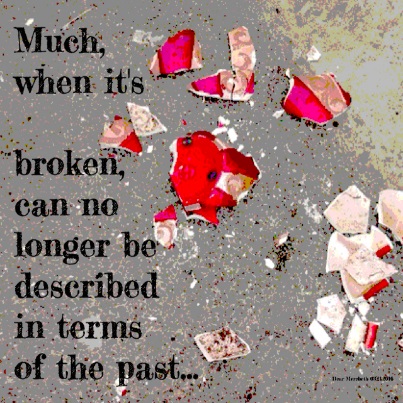
smith

laura


Laura Smith’s distinct singing voice has been a mainstay of Canadian music for many decades now. Growing up in southern Ontario, she made the bold move to Cape Breton in the mid-80s where she found a vibrant music scene and the ability to artistically grow. She has remained in Nova Scotia ever since and continues to hone her craft of songwriting.

Personal accolades include two Juno nominations, a Gemini award, two East Coast Music Awards and an Honorary Doctorate in Humanities from Mount Saint Vincent University.  She is probably most well-known for “My Bonny,” her unique interpretation of the Scottish song “My Bonnie Lies Over the Ocean”.”

She can be found at http://www.laurasmith.ca and concert dates here.


♦♦♦


Up Next:

woodrow“It goes without saying the sex was often amazing.”


vermette

1.
red cloth torn along the seam
frayed edged square
draped over palm
a pinch of tobacco
offered up
to the sky first
in thanks
then dropped to cloth
dusky yellow against
the red
pressed in
folded around
rolled
rolled
and finally tied
with gratitude

yellow dough cut out
into a perfect square
floured with delicate
fingers
folded
pinched together
in a curve

red ink on small
cuts of white
paper pushed
through the cooled seam
tiny words
of fortune
best wishes
unsolicited advice

2.
this is how I understand it
the parallels of colour
and intention
but fortune cookies
are not ceremony
they were just a product
to make Asian culture
palatable to American
consumers

made either in Los Angeles by a Chinese immigrant
or in San Francisco by a Japanese citizen
fortune cookies accompanied
the Westernized food
and other refined stereotypes
they are really more akin to
brown dolls
with fringe jackets
beaded headbands
and Made in China stamps
in the plastic
more similar than
my tobacco ties
and prayers

I never knew the real story of fortune cookies
as a child I read them with reverence
tiny truths holding wide wisdoms
I would one day understand
trying to take it in
to know it

this is the sort of prayer I make now
as I tie my tobacco ties
only it works outward
I press it in
and send it out

red cloth torn along seam
frayed edged square
draped over palm
a pinch of tobacco
offered up to the sky first
in thanks

Katherena Vermette  is a Metis writer from Winnipeg, Manitoba, Canada. Her first book, North End Love Songs (The Muses’ Company) won the 2013 Governor General Literary Award for Poetry. Her work has appeared several literary magazine and anthologies. Her recent projects include a novel, The Break (House of Anansi) and a short documentary, this river (National Film Board of Canada).

♦♦♦

Up Next:

smith“Broken can no longer be described”