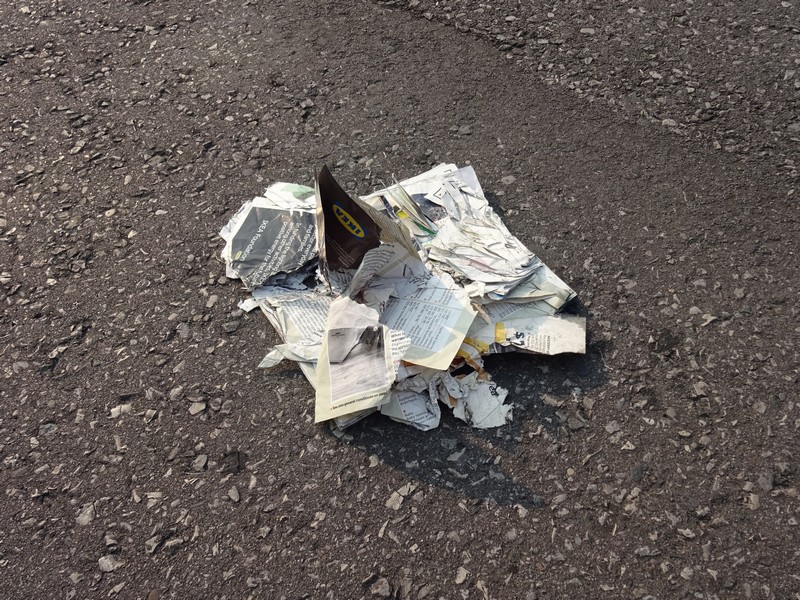
greenslade

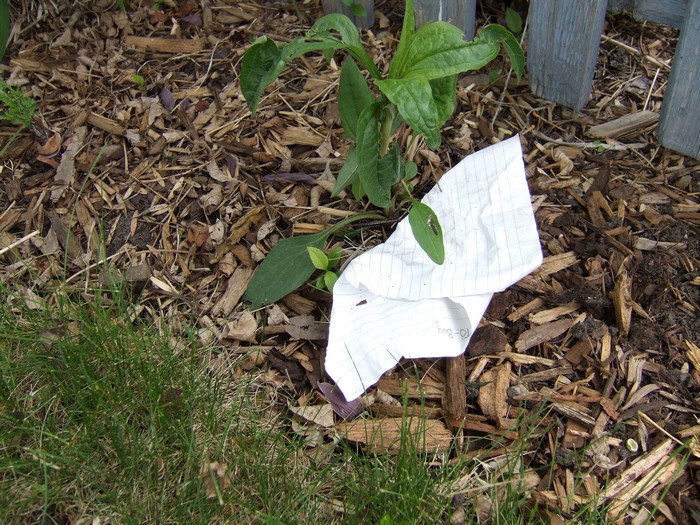
“You’re not supposed to throw them away.”

“I didn’t throw it away. I put it in my purse. It’s got to be here somewhere. Is this it?”

“That’s from November.”

“See that line? I always draw a line across the ones I’ve checked.”

“Is that it?”

“That? That’s from drycleaning.”

“What’s wrong?”

“I don’t think I picked up that drycleaning. It was just old coats I was giving away.”

“I don’t know how you find anything in there.”

“It’s got to be in here. It wasn’t a winner anyway. I always draw a line.”

“And you remember drawing a line?”

“Yes.”

“You drew a line?”

“Yes. I think so.”

“You think so.”

“I kept it. You can double-check it.”

“Has that one been checked?”

“It’s from January.”

“There’s no line through it.”

“Maybe I didn’t have a pen handy.”

“But are you sure it’s been checked?”

“Pretty sure.”

“Pretty sure. You know how many millions of dollars go unclaimed every year? I read that somewhere. Millions. Scratch tickets, they’re notorious.”

“If I re-trace my steps.”

“The government must be raking in money hand over fist from those unclaimed scratch tickets. People like us. Buying the little dream.”

“It wasn’t a scratch. I don’t buy the scratch, you know that.”

“What’s that?”

“That’s from June.”

June? Of what year?”


Born in St. Catharines, Ontario, Frances Greenslade  has since lived in Winnipeg, Regina, Vancouver, Chilliwack and now Penticton. She has a BA in English from the University of Winnipeg and an MFA in Creative Writing from University of British Columbia. By the Secret Ladder and A Pilgrim in Ireland (Penguin) are her first two books, both memoir. Her novel, Shelter, was published in Canada by Random House in 2011, in the US by Free Press and the UK by Virago in 2012. It has been translated into Dutch, German and Italian. She has taught English and Creative writing at Okanagan College since 2005.


♦♦♦

Up Next:

kuitenbrouwer“You never really love IKEA until it’s just out of reach”

choi


My new teacher got annoyed with me the first few times she called me by my Canadian name because I didn’t respond. I wasn’t being rude or acting contrary; I simply had not yet processed the foreign sounds of my new name. It was 1975 and I had just arrived in Canada without knowing a single word of English. While I don’t have many specific memories of my early years here, my insides still tighten recalling how I felt:  lost, confused, sad.

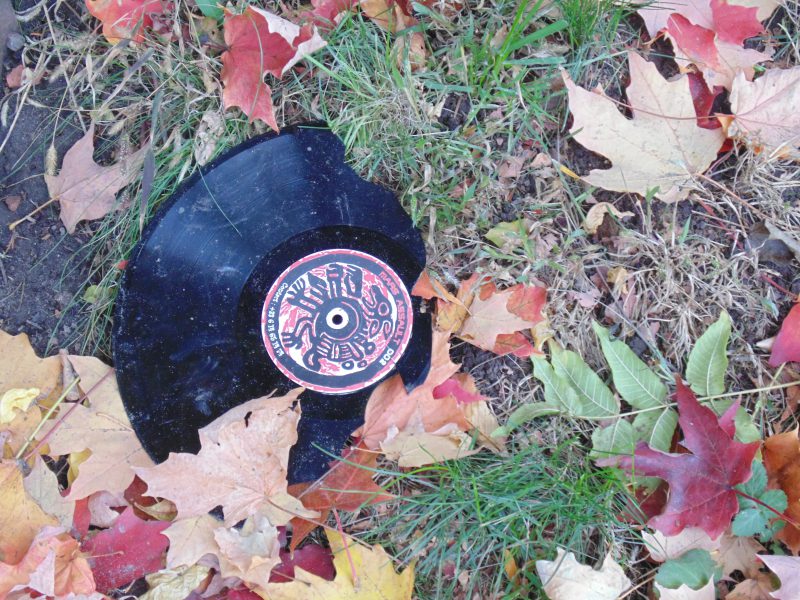
My mother, who is an avid reader, insisted her children get public library cards. What was the point, I wondered, of getting books when I couldn’t read them? To my wonderful surprise, our local library had a great collection of vinyl records. I would listen to music, I reasoned; I could even do that with my eyes closed, thus cleverly avoiding having to read English.

I fell in love with the soundtrack from Mary Poppins. Songs like “Spoonful of Sugar” and “Chim-Chim Cheree” made me get up and dance. Without realizing it, I started singing along. When I finally learned how to say “supercalifragilisticexpialidocious”, I was overjoyed. I loved too how the music and its changes in tempo and mood helped me relax and feel good.

Billy Joel remains my all time favourite singer ever since I borrowed his “Piano Man” LP. Joel’s songs like “The Ballad of Billy the Kid”, told stories, so I found myself beginning to pay attention to the lyrics. Singing along helped me with pronunciation practice. I would look up words and without even knowing it, I started using the slang I had picked up from one of his songs: “Well, it’s no big sin to stick your two cents in.” More than language lessons, music played on vinyl records during my early years in Canada taught me about my new culture and the way of life here. I also ended up falling in love with reading, writing, and even singing!


Ann Y.K. Choi was born in Chung-Ju, South Korea, and immigrated with her family to Canada in 1975. She holds an Honours BA and a Bachelor of Education. In 2012, she graduated from the University of Toronto School of Continuing Studies’ Creative Writing Program, winning their award for top final manuscript. Her debut novel, Kay’s Lucky Coin Variety, was published by Simon & Schuster Canada in May 2016. A high school teacher, she lives in Toronto, Canada. Visit her online at http://www.annykchoi.com or follow her on Twitter @annykchoi.


♦♦♦

Up Next:

greenslade“You’re not supposed to throw them away.”

popeye

Posted: August 8, 2016 in monty reid
Tags: , , , ,

IMG_0885


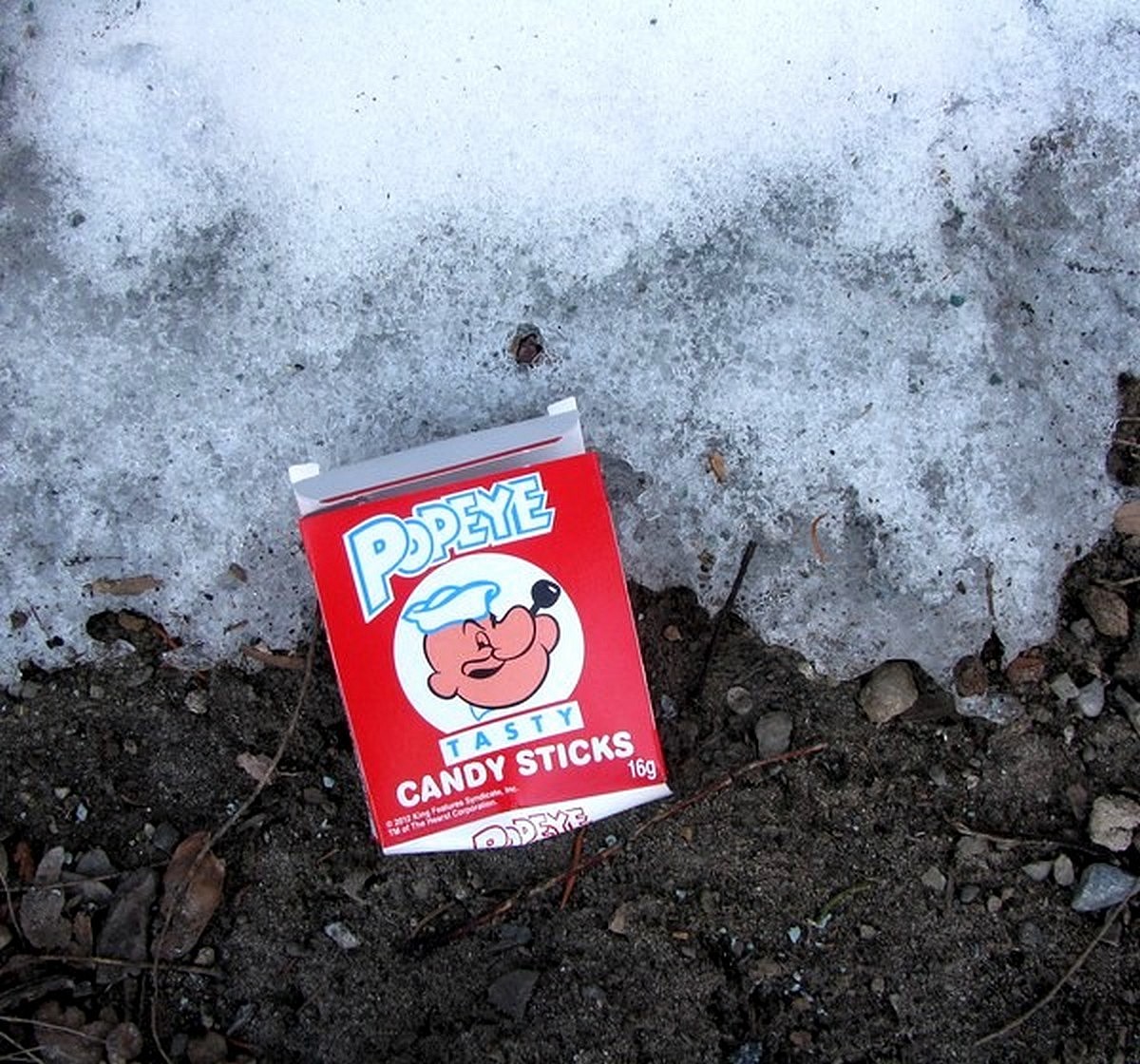
There is a falling.  It is not the same thing
as a narrative of falling. Popeye falls.

The cigarettes are gone. The smoke is exhaled.
The candy sticks that replaced the cigarettes
are gone. 

The inks and glues delaminate. The whole world
no longer fills a little box.

But the sugars, the sugars are not
exactly gone.  They leach into the earth
which is sweeter now than it was before

and even that won’t save it.  All of the objects
are altered. Your hands are altered.

Not better, but different.
Not worse.

But raw with the weather and nicotine
from before, and all the lotion you rub
into your fingers won’t get rid of it.

That’s the narrative.  The box
on the other hand, just fell.


Monty Reid  is an Ottawa writer.  His most recent book is Meditatio Placentae (Brick Books).  He is Managing Editor of Arc Poetry Magazine and Festival Director at VerseFest, Ottawa’s international poetry festival.


♦♦♦

Up Next:

choi“When I finally learned how to say “supercalifragilisticexpialidocious….”

graham


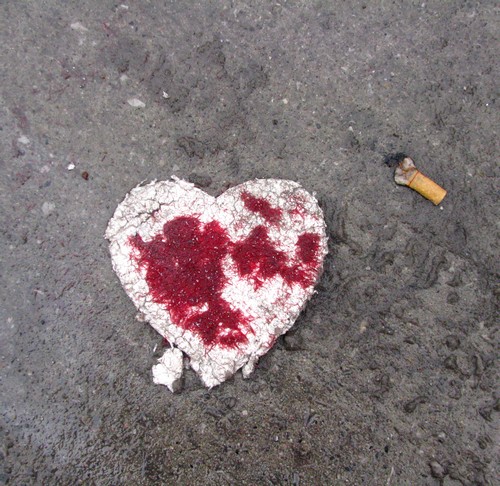
And now there’s this aftermath. Finished with
reservation. Intentions crystalline and finite.
Flattened in the feelings department.
Wet like the ground of the beer tent.
Jumped on like balloons with quarters in them.
Wet like it’s much, much too late for that angle
to dry it. Dyed the fresh ventricle red.
Proximal as if proximity’s meaningless.
Shoulders brushing, descending stairs
actually, actually done, inhabiting done,
buzzing the hope strings of done. Crumbled
once the sun rises on it. In the rhythm of heels
coming down on it. In the crunch of what’s left
in the corners of it. Staining the tongue
to the nodes of it. Waiting to light the next
smoke of it. Wet like the bus shelter floor
of it. In the grit and the groan of the wake
of it. Shoulders now riding the pine of it.
The breath, sugar, smoke, and the no of it.
Two buses pull up to dispose of it.


Laurie D. Graham  is the publisher of Brick magazine and the author of two books of poetry, Settler Education (McClelland & Stewart, 2016) and Rove (Hagios Press, 2013). She comes from outside Edmonton and now lives in Kitchener.


♦♦♦

Up Next:

IMG_0885“The whole world no longer fills a little box.”


judy fong bates


Dear Heather,

I went People’s Jewellers and bought those expensive earrings just you.  I thought you liked me. Then I found the gift tag lying on the sidewalk outside your house.  It mustve  fell out of the garbage when the garbage man emptied your can.  You couldnt even wait another day before trashing it.  I don’t know why I fell for you.  Your a selfish bitch and I never want to see you again. Love, Pete


Dear Pete,

Don’t be so quick to take umbrage.  I adore the earrings and it was very thoughtful of you.  And by the way, sweetie, it’s “you’re a bitch, not your a bitch.  Your is possessive and you’re is the contraction for you are.  There are a few other minor corrections needed, but we’ll work on them another time.

Thank you again,

Yours,

Heather


Dear Heather,

You really are a bitch.  What the fuck does umbrage mean?

Love,

Pete


Judy Fong Bates  is thrilled to be adding to The Litter I See Project. Her latest work, The Year of Finding Memory, a family memoir, was a Globe and Mail  Best 100 Book for 2010.

She  lives with her husband on a farm outside of Campbellford. They are both devoted gardeners and enthusiastic hikers.


♦♦♦

Up Next:

graham“Jumped on like balloons with quarters in them.”


tsabari


He built a tent from two sarongs and three sticks. It covered about half of their bodies when they lay down straight. Their calves were showing.

“This is great!” she lied, looking up at the tie-dye sarong stretched between the wooden sticks. When she stretched her head back she saw a row of straw huts between palm trees, and flickering candles lighting up the only restaurant on the beach. Their arms were touching. She was afraid to move.

“Wanna sleep here tonight?” he asked, and she said, and really tried to mean it: “Yeah, totally!”

He was twenty-one and she was thirty. She was on vacation. Her parents thought it would be good for her to clear her head after everything she’d gone through. They even helped paid for it. He’s been travelling for a while, a small backpack, a drum and a didgeridoo. He smoked local cigarettes and smelled like smoked salted fish. He rarely showered, his skin felt like sand paper when she caressed him. Once, in the forest, he pulled out his knife, cracked open a coconut and put it to her mouth; thin white juice dripped on her chin when she drank it. Then he carved her a smiley face on the shell.

Truth was she didn’t like sleeping outdoors. She had rented an air conditioned hotel room most backpackers couldn’t afford. She didn’t take him to her hotel room, embarrassed by her private bathroom, the beauty products she had arranged in a neat row on the sink. She had even brought her blow drier.

In the middle of the night, it started to rain, and then she wasn’t on the beach, but in water, drowning.  The water was dark and she didn’t see a shore. When she opened her mouth to call for help she found herself calling his name. She was swallowing water whenever she opened her mouth, gulps of thick black oil. She started to choke.

“Relax,” she said aloud. She read somewhere that people drown because they panic, and so they start kicking and flailing like a spider in a sink and they waste all their energy and die. She floated on her back and breathed deep through her nose. Her body became lighter until she was a leaf surfing in a stream of rainwater. When she finds him, she decided, she will tell him. “I’m in love with you,” she’ll say. “I don’t want anything from you; I just want to be honest about it.”

When she woke up she saw the tide had risen and water covered their feet. He was curled into a ball, like a kid, snoring lightly. She touched his shoulder, it was sandy and warm, like a seashell on the beach in midday. She stood up and went back to her room.


Ayelet Tsabari’s  first book, The Best Place on Earth, won the 2015 Sami Rohr Prize for Jewish Literature and has been published internationally.  Her non-fiction has won a National Magazine Award, a Western Magazine Award, and The New Quarterly‘s in-house Edna Staebler award, and in 2014 she was awarded a Chalmers Arts Fellowship. She is a graduate of the Creative Writing MFA Program at Guelph.


♦♦♦

Up Next:

judy fong bates“And by the way, sweetie, it’s *you’re a bitch, not your a bitch*…”

dachsel

Chloe repels others. Hostile,
she peels trees, pelts hotels.
She tries polite. Retches.

She pilots lithe trees to cloister.
Spies the eclipse. Recoils.
(Pls, help her.)

She etches helicopters, her spirit orphic.
So her hope triples: it clips,
it clops, coils, echoes.

Chloe, choose the sprite, the heretic.
Splice politics/poetics. Pitch heroics.
Toil. Steep. Cope.


Marita Dachsel  is the author of the poetry collections Glossolalia and All Things Said & Done, and the play Initiation Trilogy. She lives in Victoria where she is at work on a novel and her third collection of poetry.

♦♦♦


Up Next:

tsabari“Once, in the forest, he pulled out his knife, cracked open a coconut and put it to her mouth”

beach

10 AM on a Tuesday the summer of 1980. Outside of the Bank of America, Garnet Avenue, San Diego, California. Stymied, I rattle the double glass doors and peer into the dim interior. Empty. Banks are supposed to be open at 10 AM on weekdays. It’s a rule.

A sign about 18” x 12” is taped neatly to the glass from the inside. Maybe I hadn’t noticed it because the eyeholes in my mask were smaller than I preferred. Maybe I wasn’t in the habit of reading signs on doors that I was about to burst through. Maybe I had other things on my mind. Whatever. I pull off the mask, former President Jimmy Carter, and take a closer hinge at the message. It reads, “ Bank Closed. Signature Day.” I later learn that today is an Official State Holiday marking the date California signed on to the Union. Being a Canadian bank robber, one of the Stopwatch Gang, known for our meticulous planning – this – the bank being closed, seems an important oversight.

I tuck the pistol in my waistband and slouch back towards the getaway car with the bad news. My partners, now that I noticed, were sitting pretty obvious in a dented Ford Plymouth in an almost empty parking lot. I break it to them gently, still there’s a few curses and Three Stooges head slaps.

The Ghost is driving today so we head home, slower than usual. He pulls in next to the drop car, the one we switch to after we throw a bank up in the air, but I wave him on.

“Leave it” I say, “Tomorrow has a 10AM too.”


Stephen Reid’s most recent book is A Crowbar in the Buddhist Garden (Thistledown, 2012). The former bank robber turned writer lives on Haida Gwaii.


♦♦♦

Up Next:

dachsel“She etches helicopters, her spirit orphic.”


kuipers


Although sometimes I think otherwise, there’s something special about me.
I roll, I move; I am not the sea.
I have kaleidoscopic dreams.
The others, they are solitary, silent, deep. Seriously, they don’t say a word.
I rest in the shallows, looking for the world I lost.
Once I was more than this. I was…therefore I am.
I know this is true. I believe it. I have to.
The little guys, the ones beneath me, are silent. I despise them.
I long for colour, light, more.
A way to leave this hateful shore.
You can call it colourful, the grey of ocean.
You can call it life and light.
I dream of movement, the road I lost.
I remember tarmac, kerbs, sidewalks, the dry world.
Let me destroy this wet and dreadful place.
I am not destroyed. Look upon my plastic face.


Alice Kuipers  is the author of six books for young adults and children. Her work is published in thirty countries. Find writing tips and advice here: alicekuipers.com/connect or www.instagram.com/alicekuiperswritingprompts/

♦♦♦

Up Next:

beach

“Maybe I wasn’t in the habit of reading signs on doors that I was about to burst through.”

coyote

My gran used to smoke the cheap cigarettes. John Player Specials, Craven A menthols, Number 7s. She’d buy them by the carton and squirrel them away in the closet in her bedroom. My uncles would swipe one from her open pack on the kitchen table, and cough and stare down at the red cherry between their fingertips and say fuck these are awful why can’t you get Du Mauriers? Export As?

She would make that noise with her tongue and tuck the rest of the pack into her purse.

She had one of those little cigarette machines, too, where you buy the filters and tubes and the tobacco in a tin, and her and my aunts would sit around the table and stuff little wads of tobacco into the groove in the machine and slide it back and forth and a cigarette would pop out the end. You had to get just the right amount in there to get it to burn just right, but look how much cheaper it is, they would all say, like they were trying to convince each other of something none of them truly believed.

My gran unknowingly smoked her last cigarette on a Friday afternoon, and broke her hip that night when her foot fell off of the footstool during Jeopardy! and her heel hit the floor on a weird angle. She always said that new hardwood floor was easier to sweep than the carpet ever was to keep vacuumed.  She was hospitalized right away, went into a coma, and died the following Wednesday without ever really waking up again. She was almost ninety years old. It all happened so fast but hey at least she never had to quit smoking, everybody said.

Ivan Coyote  was born and raised in Whitehorse, Yukon Territory. An award-winning author of eight collections of short stories, one novel, three CD’s, four short films and a renowned performer, Ivan’s first love is live storytelling, and over the last nineteen years they have become an audience favourite at music, poetry, spoken word and writers’ festivals from Anchorage to Amsterdam.

♦♦♦


Up Next:

kuipers“I remember tarmac, kerbs, sidewalks, the dry world.”