Archive for February, 2024

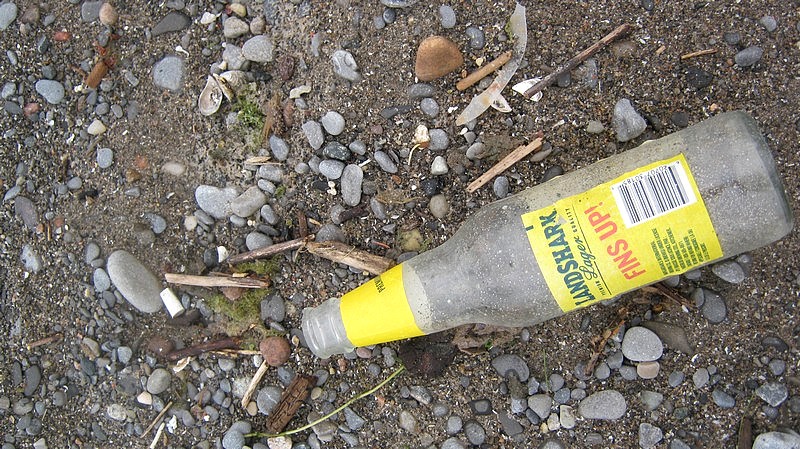
litter - haines

this past summer, a little high,
i plunged into the pacific. shoved
an empty bottle of lager, all
that was left in the fridge, under
my beach bag so, i wouldn’t forget it

at the end of the day. the tide comes in
and swallows the beach. in the saltwater,

i float, gulping back the grief that still comes
unbidden. the pain of mother loss acts like sea suck.

the give and take, the mostly take. the ache pulled
through my throat each time i try to breathe past this loss.

a nudist, half-hidden behind a collection
of driftwood offers space. a kind of easy

companionship. neither of us asking anything
of the other. each of us ignoring what the other wants

to hide. his flesh. my guilt. an addiction squirming
below skin. and i’m trying not to drown in it.

no extraordinary measures

the thing is, after my mother’s death
i drank myself tattered for a little while.
there is some measure of relief
in recognizing this. the way aching made
me ravenous. and now, the way I’ve begun
to think of grief as a sapling. the ways, i feed it.
i do not know if it was better to starve.

Rayanne Haines (she/her) is the author of three poetry collections, the creator and host of the literary podcast Crow Reads, the President for the League of Canadian Poets and an Assistant Professor with MacEwan University. Her 2021 hybrid poetry collection, Tell the Birds Your Body is Not a Gun won the Stephan G. Stephansson Alberta Literary Award and was shortlisted for both the Robert Kroetch award and the ReLit Award. She’s been published in the Globe and Mail, Minola Review, Fiddlehead, Grain, Prairie Fire and others. A CNF poetry and essay collection exploring grief after mother loss, identity, and gendered trauma is forthcoming from Frontenac House September 2024 
kishkan

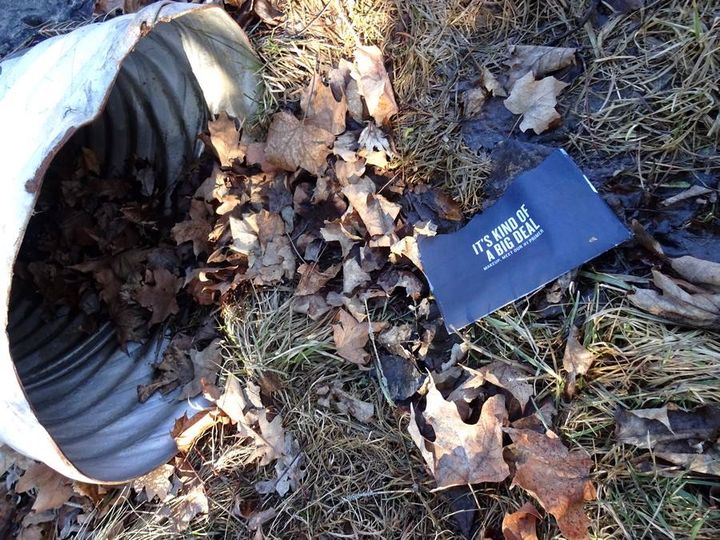
I am looking at old maps of Vancouver showing the buried creeks, blue lines forming a tangle under the grid of streets, the names almost forgotten: Salish Stream, Spanish Banks Creek, Still Creek: their sibilant waters under parks, under streets, meandering just below the surface of parking lots and shopping malls, still alive in family stories danced into being, in dance itself along Brewery Creek, its remaining shadow on streets and alleys . Where the creeks begin: in seepage, in snow-melt, in small springs rising from slopes, they begin, a trickle, gathering, growing, they become themselves, cascading over stones, wearing channels in rock, runoff and groundwater, fringed with willows, salmonberry, alders, they find their own patient way to lakes or harbours, they empty, little riffles over the sand and pebbles.  Their courses fill with rain, fallen leaves, the exoskeletons of mayflies, dragonflies, drowned navigator shrews who misjudged distance from bank to bank, a sodden paper bag, forgotten bottles of wine left by lovers who picnicked then walked into the sunset, arms wrapped around each other.  I am looking at old maps of Victoria, threaded with Bowker Creek, Cecelia Creek, Johnson and Rock Bay Creeks, East Creek and Fairfield Creek in the Ross Bay Cemetery where as a child I pressed my ear to the ground, expecting to hear the dead and instead, water, water, lilting in its pipes and brickworks, the weight of trees planted a century before, headstones, mausoleums, families united finally in small fenced plots. I am looking at maps. I am remembering the sound of water underground, the mint growing in the damp ground where a creek passed under a park across from our house on its way to Ross Bay, and I am remembering a walk along Colquitz Creek when a section long-buried was daylighted after years of hard work on the part of volunteers, a stray balloon still tied to a tree after the celebration; I remember hearing voices of school children eager to release their hatchery salmon, a few dogs up to their ankles, the last of the orchard trees quickening to the sound of riffles, birdsong, a dipper fishing for insects in the quick water, the old culvert left in the grass.

♦♦♦

Theresa Kishkan lives on the Sechelt Peninsula with her husband, John Pass, in a house they built and where they raised their 3 children. She has published 16 books, most recently Euclid’s Orchard, a collection of essays about family history, botany, mathematics, and love (Mother Tongue Publishing, 2017); a novella, The Weight of the Heart (Palimpsest Press, 2020), in which a young graduate student attempts to create a feminist cartography with the works of Ethel Wilson and Sheila Watson; and Blue Portugal and Other Essays (University of Alberta Press, 2022), a collection of lyrical essays. Her books have been nominated for many awards, including the Hubert Evans Award and the Ethel Wilson Prize. Her interests include textiles, ethnobotany, music, human and physical geography, and colour theory, strands of which are braided together in Blue Portugal. Current work-in-progress includes a novel, Easthope, and a long essay about the male gaze, painters and their models, and obsession.

She can be found online here.